





Why Electric Toothbrush Bases Get Dirty (and What Actually Helps)
If you’ve owned an electric toothbrush for any length of time, you’ve likely seen it: a ring of residue where the handle meets the charging base, or buildup collecting around the seam where the brush head attaches. This isn’t a sign of poor hygiene or neglect. It’s a predictable outcome of how electric toothbrushes are designed, and how moisture behaves after use.
Understanding why this happens makes it easier to see which factors actually influence buildup, and why some storage setups stay cleaner than others over time.
The basic issue: moisture moves downward
After brushing, water, saliva, and toothpaste remain on the bristles and handle. Rinsing removes surface debris, but it doesn’t eliminate moisture immediately. Instead, that water follows gravity.
On an electric toothbrush stored vertically, moisture migrates down the handle. It settles into seams, grooves, and connection points, eventually reaching the base where the handle meets the charger. This movement is gradual and often unnoticed, but it continues for hours after the brush is put away.
Over days and weeks, the residue carried by that moisture accumulates. The result is familiar: discoloration, film, or hardened deposits where water repeatedly comes to rest.
Where buildup consistently forms
Residue on electric toothbrushes tends to appear in the same places, regardless of brand.
The brush head connection
The joint where the replaceable head meets the handle is a functional seam. Even when it looks clean, small amounts of moisture and toothpaste can seep inside. Because this area is hidden during normal use, buildup often goes unnoticed until it becomes visible or difficult to remove.
The charging base contact area
At the bottom of the handle, water that has traveled downward collects near the charging post or pad. Many bases provide stability but little airflow. Moisture lingers here longer than on exposed surfaces, leaving behind mineral deposits or residue as it evaporates.
Grooves, buttons, and textured surfaces
Design features meant to improve grip or usability also create small recesses. These areas hold moisture longer and are harder to dry passively, making them common sites for buildup.
The pattern isn’t random. It reflects where moisture slows down.
Why charging base design plays a central role
Not all charging bases manage moisture the same way.
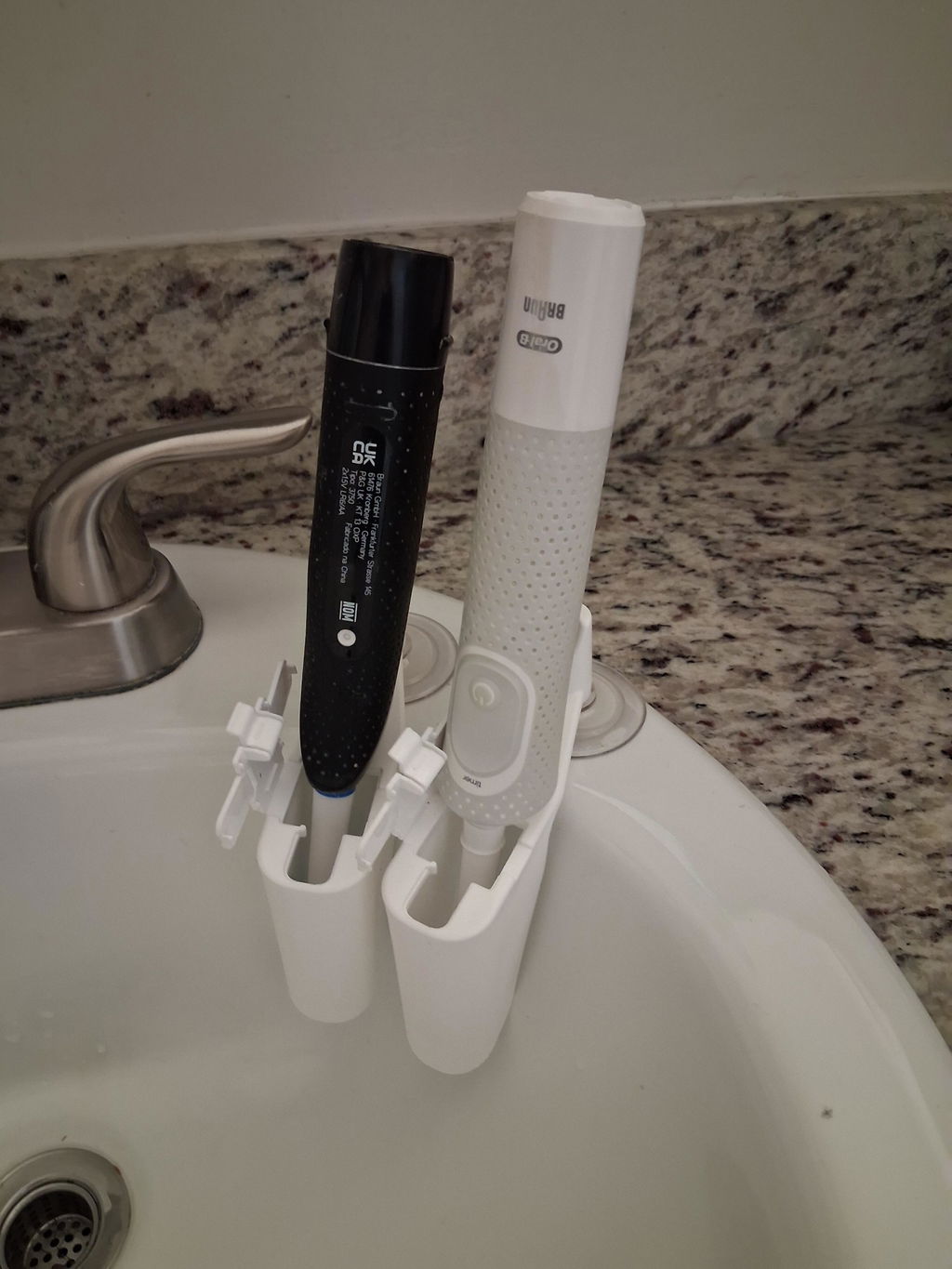
Flat bases with a central post often create a shallow well where water collects. Cup-style cradles stabilize the handle but also surround the wet end of the brush, limiting airflow. In both cases, moisture remains in contact with surfaces longer than it would in open air.
Drying depends on exposure. When air circulation is restricted, by tight-fitting bases, enclosed holders, or humid bathroom environments, evaporation slows. The longer moisture stays put, the more residue it leaves behind.
This is why cleaning alone rarely solves the issue permanently. The design keeps recreating the same conditions.
Why wiping helps less than expected
Wiping the handle after use can remove surface moisture, but it doesn’t reach the places where buildup actually forms. The connection seam under the brush head, the recess around the charging post, and the underside of the handle all continue to collect moisture over time.
There’s also a timing problem. Much of the moisture migration happens after the toothbrush has already been stored. By then, wiping has done all it can. Unless the brush dries quickly and completely, residue formation continues quietly.
Cleaning addresses what you can see. Drying addresses what happens when you’re not looking.
What actually makes a difference
Reducing buildup comes down to shortening the amount of time moisture stays in contact with the brush and base.
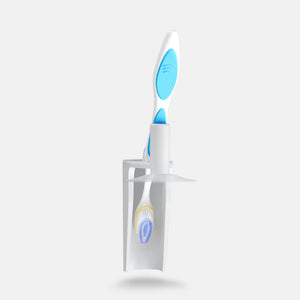
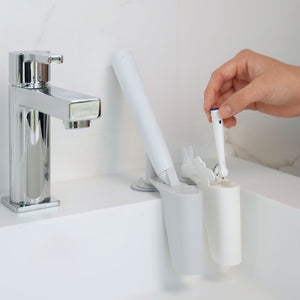
Allowing components to dry more completely, especially around seams and contact points, reduces residue formation over time. Separating parts periodically can help reveal and dry areas that otherwise remain concealed. Improving airflow around the brush and avoiding designs that trap water at the base consistently leads to better outcomes.
The most effective setups are those that don’t rely on constant intervention. When storage design allows moisture to drain away and evaporate freely, buildup becomes less persistent without requiring daily attention.
Putting it in perspective
Residue around electric toothbrush bases isn’t a mystery and isn’t a personal failure. It’s the predictable result of moisture moving downward and settling in places where airflow is limited.
Once you understand that mechanism, the path forward becomes clearer. Managing moisture through drying-friendly storage reduces buildup more reliably than repeated cleaning alone. The goal isn’t perfection, it’s designing conditions where the brush can dry before residue has time to establish.
That shift, from reacting to buildup to preventing it through drying—changes how electric toothbrush storage feels to live with over time.
Related reading in the Toothbrush Hygiene Hub