




Article: Upright vs Head-Down Toothbrush Drying: What Actually Matters

Upright vs Head-Down Toothbrush Drying: What Actually Matters
There is no shortage of opinions about the “correct” way to store a toothbrush. Some advice favors upright storage. Others argue that storing a brush head-down is more hygienic. Online, both positions are often presented with confidence, sometimes bordering on certainty, which can make a simple daily habit feel oddly complicated.
The reality is quieter and more practical. Toothbrush hygiene isn’t determined by a single rule about orientation. What matters is whether moisture can reliably leave the bristles between uses. Once you understand how drying actually works, it becomes easier to see why some storage setups perform better than others, and why many common holders fall somewhere in between.
Why drying matters in the first place
After brushing, moisture remains trapped between the bristles. That water doesn’t disappear instantly. It evaporates gradually, depending on how much air reaches the brush and how easily excess water can drain away.
When a toothbrush stays damp for long stretches, residue has more opportunity to accumulate. This isn’t about panic or pathogens, it’s basic mechanics. Moisture, organic material, and time create conditions where buildup is more likely. Faster, more complete drying shortens that window.
Effective drying depends on three things:
-
Drainage – how easily water can leave the bristles
-
Airflow – how much open air reaches them
-
Exposure – whether moisture is allowed to escape or gets trapped nearby
Orientation plays a role, but it’s only part of the picture.
Upright storage: common, simple, and usually adequate
Storing a toothbrush upright is the most familiar option. Cups, countertop holders, and shared stands are easy to use and require no installation. In many bathrooms, upright brushes do dry reasonably well, especially if they’re not crowded together and the surrounding area has decent airflow.
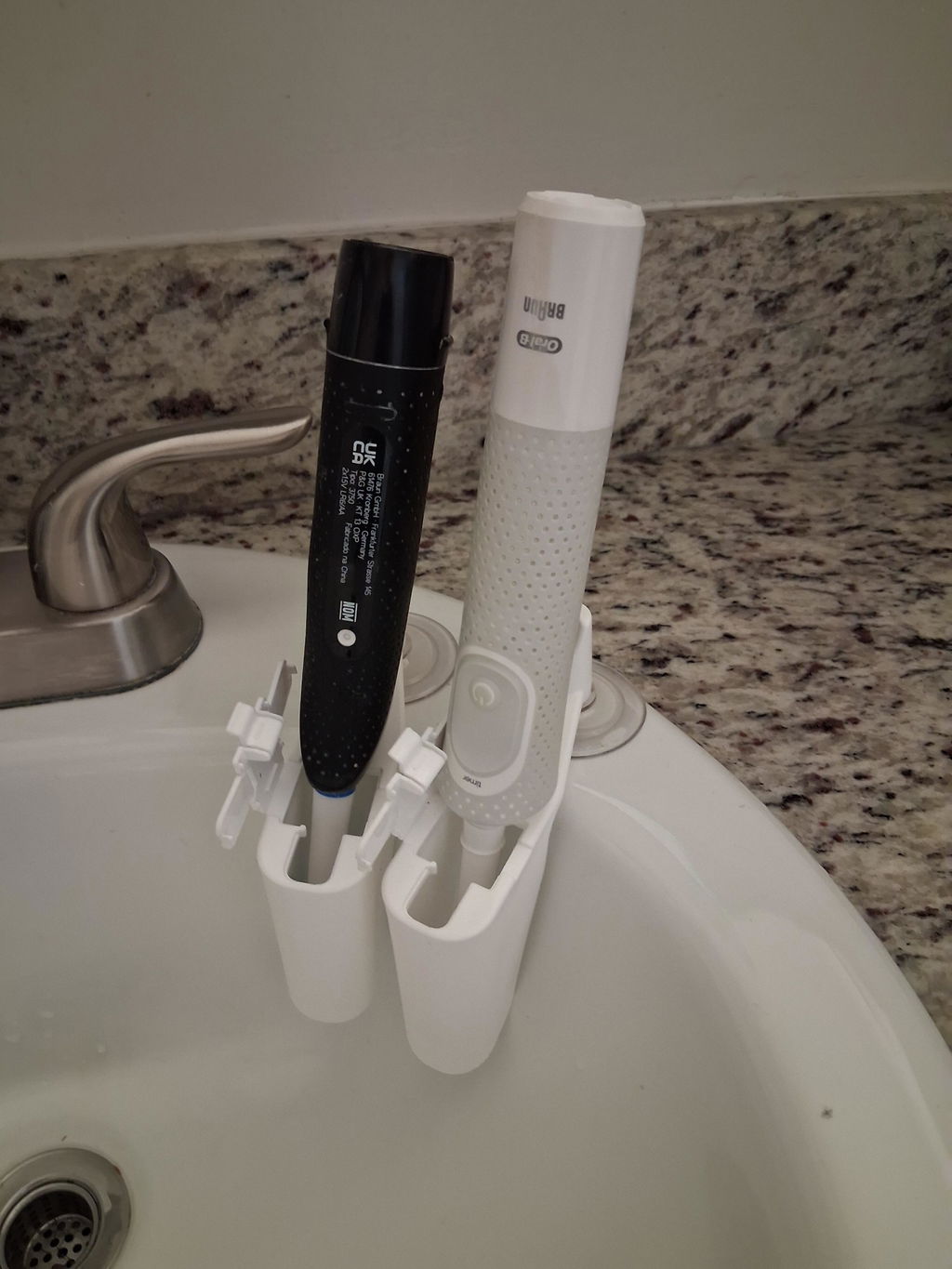
The drawback isn’t the upright position itself. It’s what often comes with it: enclosed bottoms, pooled water, or holders that quietly collect moisture underneath the brush head. Over time, those designs can become maintenance points of their own.
Upright storage works best when the holder stays dry, is easy to clean, and doesn’t surround the wet end of the brush with walls or tight spaces.
Head-down storage: using gravity more deliberately
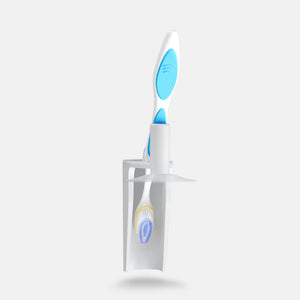
Head-down storage approaches the same drying goal from a slightly different angle. With the bristles pointing downward, gravity helps water leave the brush more directly. Moisture drips away rather than traveling down the handle or collecting inside a cup.
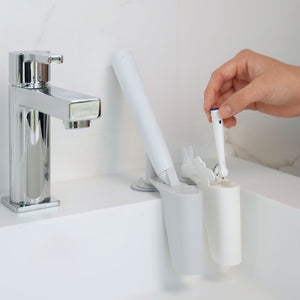
This can be especially useful in small bathrooms or setups where counter space is limited. It also avoids one common issue with upright holders: residue buildup at the base, where water repeatedly settles.
That said, head-down storage only works well when the brush is properly supported and exposed to air. If the bristles press against a surface or sit inside a tight enclosure, airflow suffers and drying slows, regardless of orientation.
What actually determines how well a toothbrush dries
When you strip away the debate, the deciding factors are consistent:
-
Can water leave the bristles easily?
Gravity helps whether the brush is upright or head-down, but designs that actively guide water away tend to dry more predictably. -
Is air free to circulate around the brush head?
Open exposure speeds evaporation. Covers, caps, and sealed containers slow it dramatically. -
Does the storage design stay dry itself?
A holder that traps moisture can undermine drying even if the brush is positioned “correctly.”
This is why orientation alone is a blunt tool. Two upright holders can perform very differently depending on whether one is open and cleanable while the other quietly traps water out of sight.
Where most confusion comes from
Conflicting advice persists because both upright and head-down storage can work, and both can fail, depending on the surrounding design.
General recommendations often focus on orientation because it’s easy to explain. What’s harder to communicate is that many everyday holders are neutral at best: they store a toothbrush, but they don’t actively support drying.
The more meaningful distinction isn’t upright versus inverted. It’s passive storage versus intentional drying.
Practical takeaways
If your toothbrush feels dry when you reach for it again, your setup is probably doing its job. There’s no need to overhaul a system that’s working.
But if you’ve noticed persistent dampness, residue in holders, or the need to clean storage accessories more often than expected, orientation alone may not be the issue. In those cases, improving airflow, drainage, and exposure tends to matter more than flipping the brush one way or the other.
Rinsing thoroughly after use, shaking off excess water, and keeping storage surfaces clean all help, but the design of the holder itself plays a larger role than most people realize.
Summary
The upright versus head-down question is less important than it first appears. Both orientations can support drying when airflow is open and moisture has a clear path to escape.
What consistently undermines drying is enclosure and trapped water. What supports it is storage that treats drying as a function, not an afterthought.
Once you start looking at toothbrush storage through that lens, the differences between designs become easier to see.
This article is part of the Toothbrush Hygiene Hub. For related reading, see Why Do Toothbrush Holders Get Moldy?