




Article: Why Do Toothbrush Holders Get Moldy?
Why Do Toothbrush Holders Get Moldy?
If you’ve ever noticed dark residue, slime, or a persistent odor inside a toothbrush holder, you’re not imagining it. This is a common outcome of how many holders are designed, and it has a straightforward mechanical explanation.
Understanding what causes this buildup isn’t about blame or cleaning routines. It’s about how moisture behaves once a toothbrush is put away.
Moisture Is the Driver
Every toothbrush retains water after use. Moisture remains between the bristles and along the head, even after shaking or tapping. What happens next depends almost entirely on where that water goes.
In many holders, especially those with closed bottoms or limited ventilation, moisture has nowhere to escape. It collects at the base, condenses on surfaces, or remains trapped in a damp micro-environment.
Bathrooms themselves compound the issue. Humidity from showers, limited air circulation, and frequent water use all slow evaporation. When a holder sits in this environment and continuously receives moisture from a wet brush, drying becomes incomplete between uses.
The result isn’t sudden, it’s cumulative.
How Buildup Forms Over Time
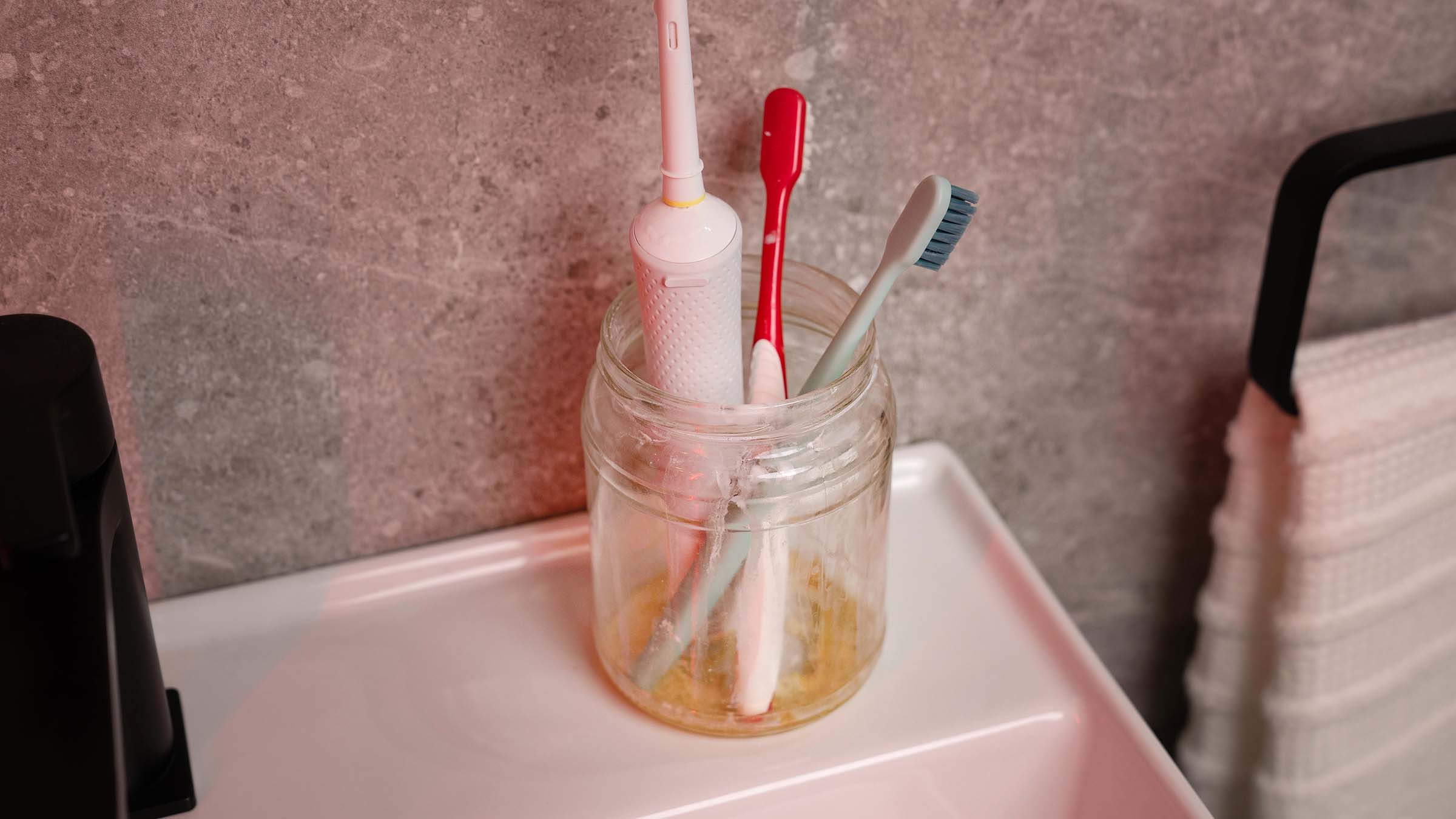
Along with water, toothbrushes carry small amounts of toothpaste residue and organic material from brushing. When these substances drip into a holder and remain in standing moisture, they form a film on interior surfaces.
Over time, this film thickens. It may appear as dark staining, slimy residue, or a musty smell. Often referred to as biofilm, this buildup isn’t mysterious or unusual, it’s the predictable outcome of moisture and organic material sitting undisturbed.
The key point is that the holder itself becomes the collection point. Once residue establishes inside a damp container, it tends to persist unless the conditions change.
Why Holder Design Is the Real Variable
Not all toothbrush holders behave the same way, and the difference comes down to how they manage water.
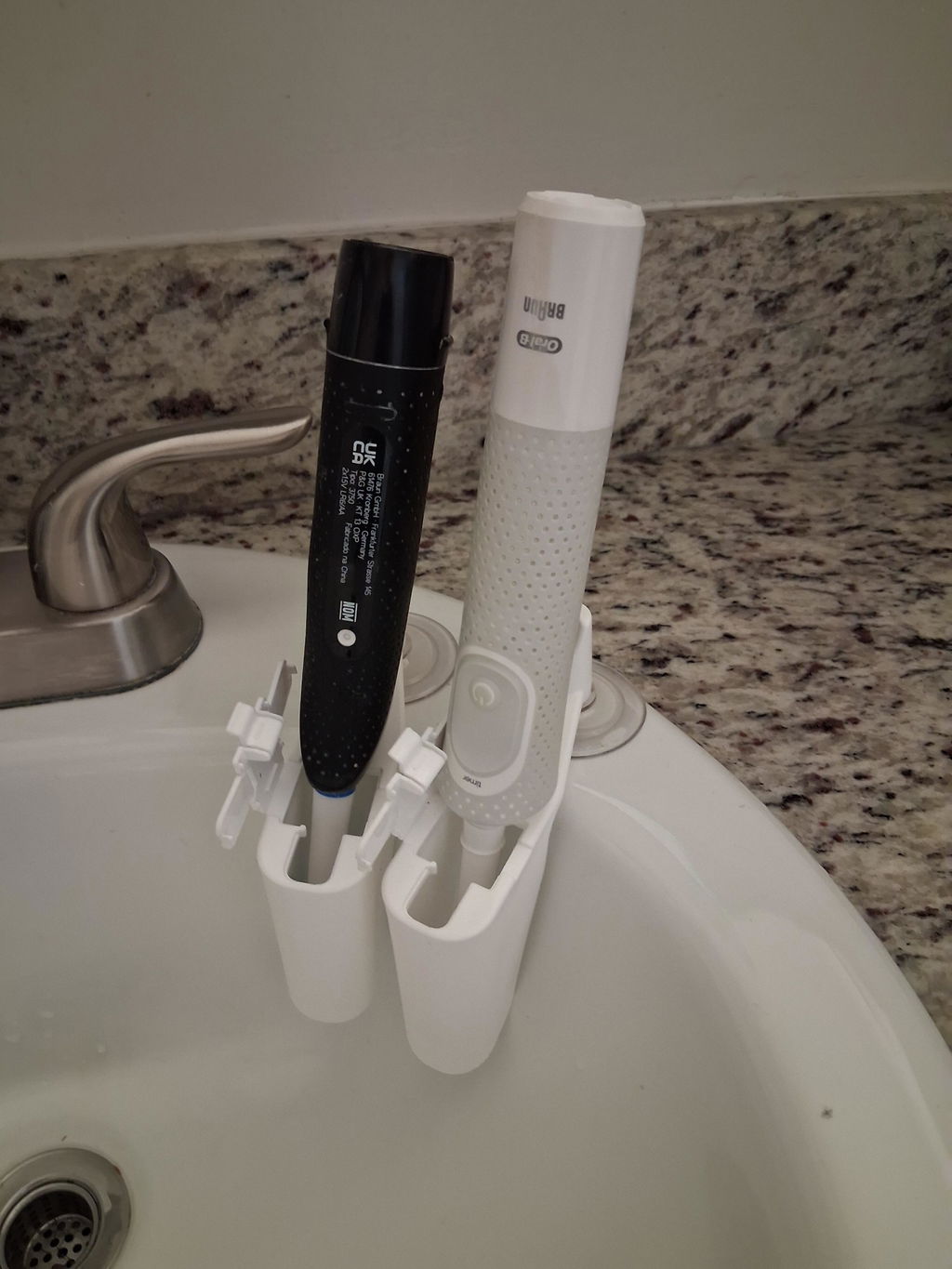
Designs with solid bottoms, enclosed cups, or decorative cavities tend to retain moisture. Water drips off the brush and accumulates inside the holder, where airflow is limited and evaporation is slow. Even holders that appear open from above can trap moisture below the brush head.
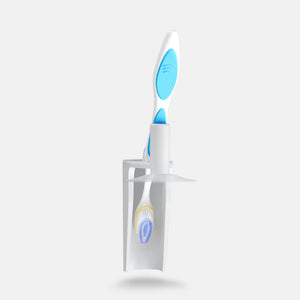
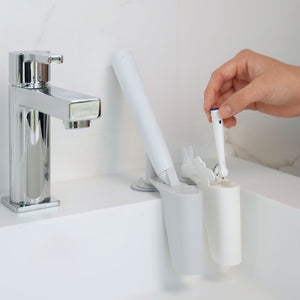
By contrast, designs that allow water to drain away from the brush entirely, and that keep the bristles exposed to open air, reduce the opportunity for residue to form. This isn’t about complexity or added features. It’s about whether the design allows moisture to exit the system instead of collecting inside it.
Drying time follows design. Faster drying means less buildup.
Why Drying Between Uses Matters
Most people use a toothbrush roughly twice a day. That leaves a limited window for moisture to evaporate before the next use.
When a brush dries fully between uses, conditions are less favorable for residue accumulation. When it stays damp, because water is trapped below it or airflow is restricted, buildup becomes more likely over time.
This is why dental guidance consistently emphasizes drying and airflow, and why enclosed storage and closed-bottom holders are often associated with residue problems. The issue isn’t orientation alone; it’s whether moisture is allowed to leave.
A Clear, Non-Alarmist Perspective
Mold or residue in a toothbrush holder isn’t a personal hygiene failure, and it’s not something that happens randomly. It’s the natural outcome of storing a wet object in a space that doesn’t allow it to dry.
When moisture is trapped, buildup follows. When moisture is allowed to drain and evaporate, buildup is less likely to establish in the first place.
Understanding this shifts the focus away from constant cleaning or vigilance and toward the underlying mechanics of storage design. Reduce trapped moisture, and the problem largely resolves itself over time.
Related reading in the Toothbrush Hygiene Hub
• Upright vs Head-Down Toothbrush Drying: What Actually Matters
• Does Toilet Plume Really Affect Toothbrushes?