




Toothbrush Cup vs. Toothbrush Holder: What's Actually Different
People use “toothbrush cup” and “toothbrush holder” like they’re the same search. They’re not the same object, and the mix-up is why a lot of people end up buying something that looks right in a product photo and then grows mold in three weeks.
The two solve the storage problem in opposite ways. One collects water. The other is built to get rid of it.
What a toothbrush cup actually is
A cup is a freestanding container, bristles usually pointed up, sitting flat on the counter. It’s the classic bathroom-counter item: often matched to a soap dispenser set, sold in ceramic, glass, or plastic.
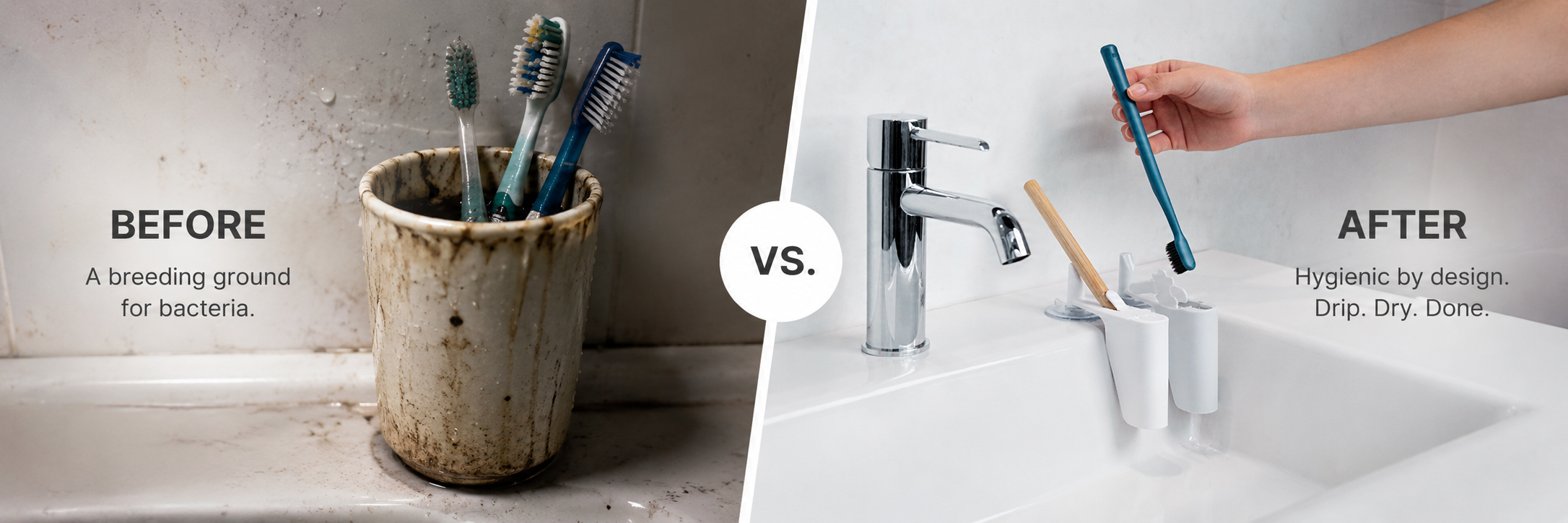
The defining feature of a cup, structurally, is that it has a solid base. Whatever water runs off the brush after rinsing has nowhere to go but down, and down is the bottom of the cup. It sits there until it evaporates or someone dumps it out, neither of which happens on a schedule that keeps the cup dry.
A cup isn’t a badly made object. It’s doing exactly what its shape is built to do: contain. That’s the wrong job for something a wet brush lives in.
What a toothbrush holder actually is
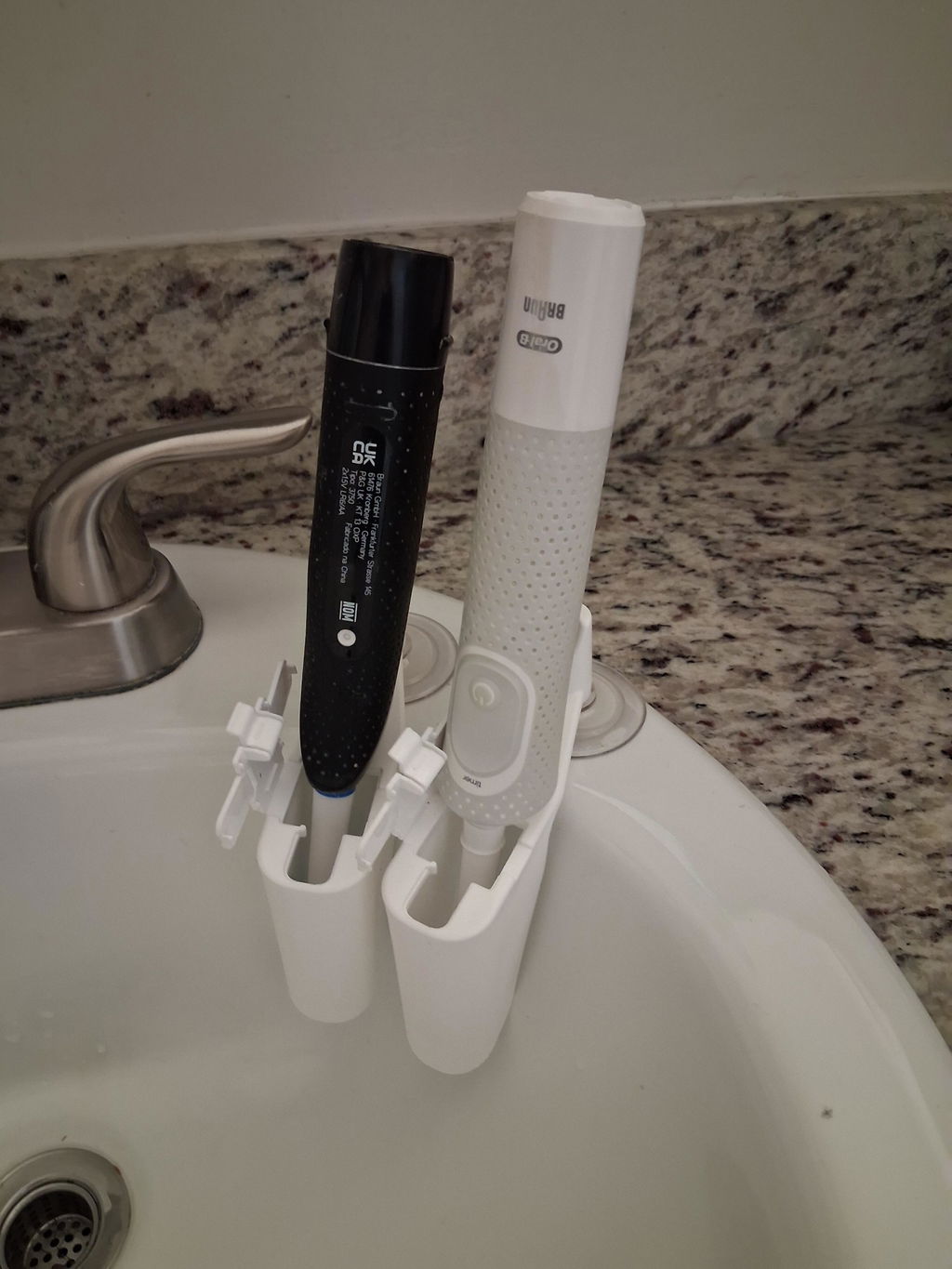
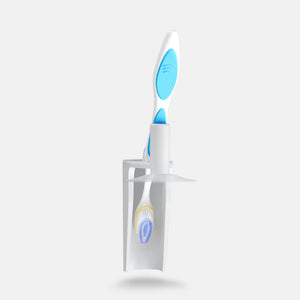
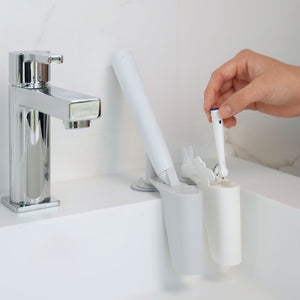
A holder is built around the opposite goal: keep the brush and the water apart. That can mean a slotted stand that suspends the brush above a tray, a wall-mounted bracket that holds the handle with the head hanging free, or a mount that lets the brush drip straight into the sink instead of into a container at all.
The shared trait across every good version is the same: no reservoir. Water runs off the brush and either drains away immediately or evaporates in open air instead of pooling anywhere.
Why the distinction matters for hygiene
A cup traps moisture at the base by design. A holder is designed to prevent exactly that. This is the entire difference, and it’s also why “toothbrush holder” listings that are really just cups with a nicer name cause so much confusion. Calling something a holder doesn’t change its shape.
Airflow matters as much as the base. An open holder lets air move around the bristles and dries a brush in under an hour. A cup, even an open-topped one, restricts airflow between brushes bunched together and keeps the head sitting in warmer, wetter air near the base.
None of this means cup-style products are unsanitary by definition. It means they need more maintenance to stay that way, since the design isn’t doing any of the work for you.
When a cup still makes sense
A cup can work fine if it gets cleaned weekly, if the water is dumped out and wiped dry between cleanings, and if it’s not shared by more brushes than it comfortably fits. Some people are genuinely disciplined about this, and a cup that matches the rest of the counter is a reasonable tradeoff for them.
It stops working the moment the routine slips, which for most households is within the first month.
How to tell what you’re actually buying
Product listings aren’t consistent about the terms, so the description alone won’t tell you. Check the base: does it hold water, or does it drain? Check the sides: open airflow, or a closed compartment? Check the bottom of the reviews, not the top: recurring mentions of a smell or residue at the base are the clearest sign a “holder” is functioning like a cup.
If the answer to “where does the water go” is anywhere other than “away,” it’s a cup. The name on the listing doesn’t change that.
No reservoir, no standing water. Built to be a holder, not a cup. Shop the Nook toothbrush holder →