



Article: Toothbrush Holder Materials Compared: Does It Actually Matter What It's Made Of?
Toothbrush Holder Materials Compared: Does It Actually Matter What It's Made Of?
Shopping for a toothbrush holder, the material is usually the first filter people apply. Ceramic looks clean and expensive. Bamboo feels sustainable. Stainless steel feels premium and durable. Plastic gets skipped over as the cheap default.
That instinct isn’t wrong, exactly. The materials really do behave differently. It’s just aimed at the wrong variable. Material affects durability, price, and how the holder feels to own. It does almost nothing to prevent the actual problem people are shopping to solve: mold.
What each material actually does
Ceramic. Non-porous once glazed, so it resists staining and doesn’t hold odor. It’s also heavy, breakable if dropped on a tile floor, and prone to hard-water scale that needs an occasional vinegar soak to clear. A well-made ceramic piece can last for years. A dropped one lasts zero seconds.
Stainless steel. 304-grade steel resists rust and doesn’t absorb anything from the toothpaste or the toothbrush sitting in it. Cheaper steel grades will spot, streak, and eventually rust at the seams. Steel also shows water spots more visibly than any other material here, which is a cosmetic issue, not a hygiene one.
Bamboo. Marketed as the natural, sustainable option, but it’s the worst-performing material in a wet bathroom. Bamboo is porous. Untreated, it absorbs water every time it gets splashed, which is constantly, next to a sink. Sealed bamboo holds up better but still needs to stay dry between uses and generally needs replacing far sooner than ceramic, steel, or plastic.
Plastic (specifically recyclable polypropylene, not the brittle stuff). Non-porous like ceramic, but it won’t chip or shatter. It’s lighter, cheaper to produce, and, more than people assume, easier to mold into precise ventilated, open shapes. Ceramic and steel are harder and more expensive to manufacture with fine drainage slots or an open-back design. Plastic isn’t a downgrade from the “nicer” materials. It’s the material that makes the better-performing shapes possible.
The variable that actually predicts mold
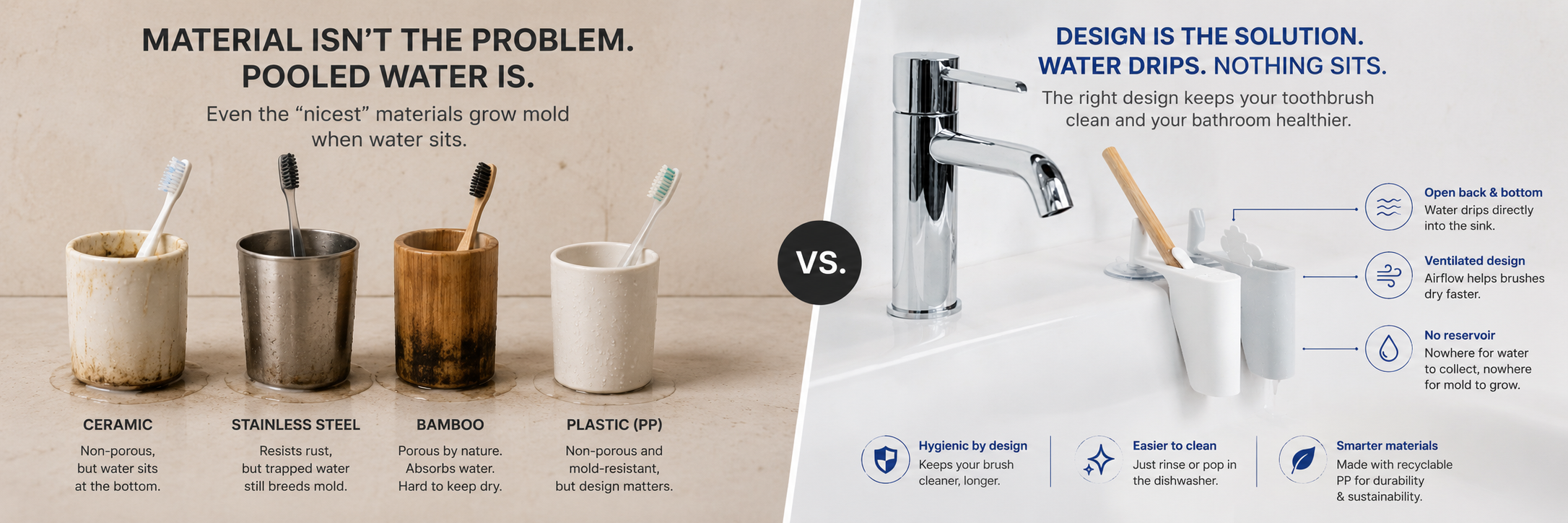
Ceramic, plastic, bamboo, and stainless steel can all grow mold under the right conditions. All four also stay clean under the right conditions. The determining factor isn’t the material. It’s whether the holder has a reservoir.
Any holder with a base that catches water and holds it there is slow-evaporating regardless of what it’s made of. A ceramic cup with a flat bottom collects the same standing water as a plastic one. A bamboo holder with a closed base traps the same moisture a sealed steel tube would.
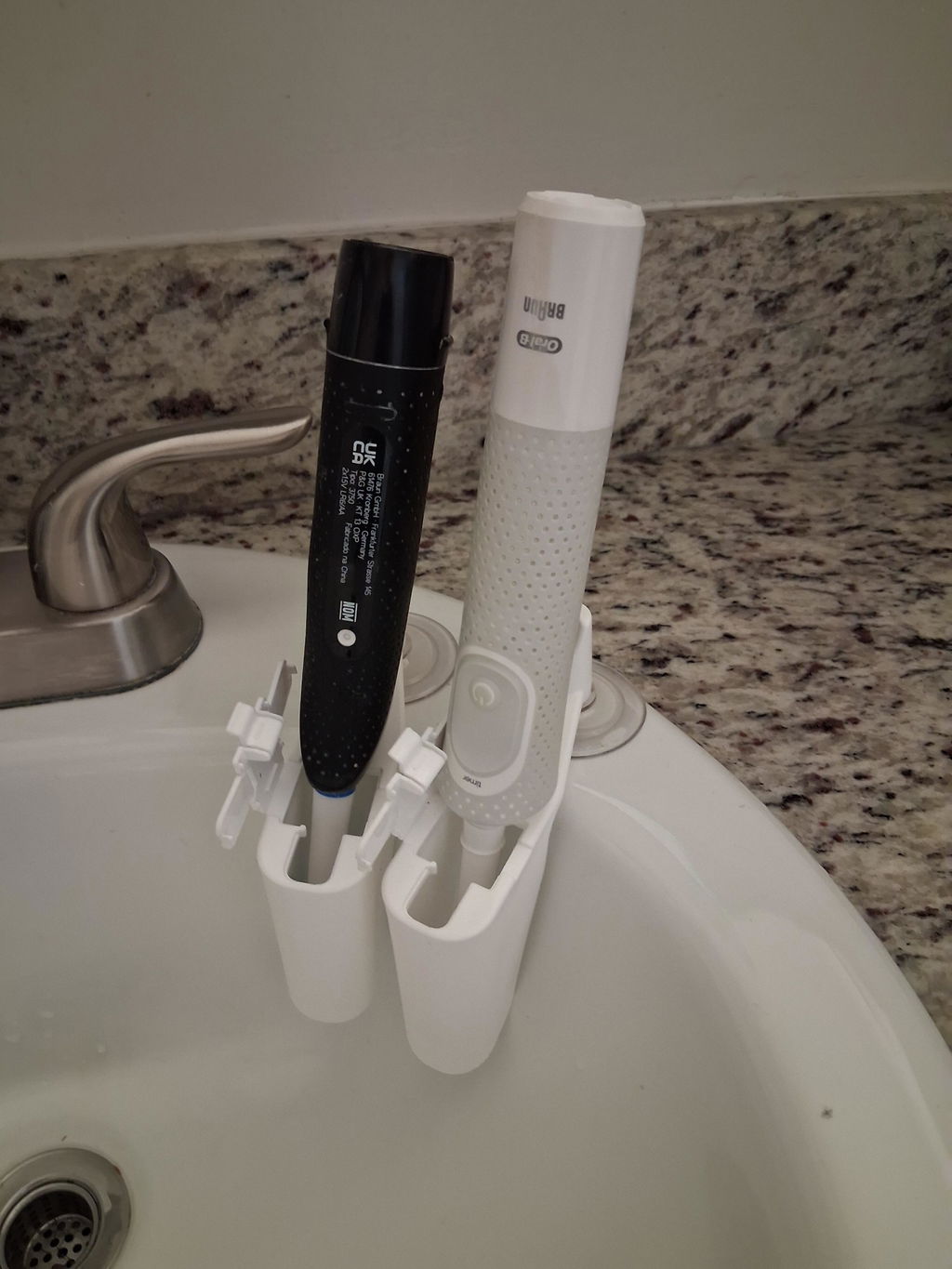
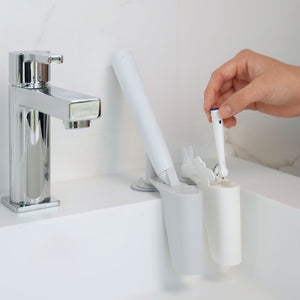
Design that gets water away from the brush immediately, no cup, no tube, no pooling base, outperforms a “better” material in the wrong shape every time. This is why two holders made of the same plastic can have completely different hygiene track records: one drains into the sink, the other has a lip that holds a quarter inch of water at the bottom.
Where material does actually matter
Material isn’t irrelevant. It just answers different questions than “will this grow mold.”
Cleaning routine. Plastic and steel are usually dishwasher-safe, which means the holder gets cleaned as often as you run a load. Ceramic can go in the dishwasher too, but repeated heat cycles are what eventually cause hairline cracks. Bamboo can’t go in the dishwasher at all and needs a hand wipe-down and full air-dry to avoid warping.
Longevity. Steel and non-porous plastic tend to outlast the others under normal bathroom conditions. Ceramic lasts a long time until the day it doesn’t. Bamboo has the shortest realistic lifespan in a humid bathroom, sealed or not.
Cost and weight. Ceramic and steel cost more to produce and ship. Plastic keeps the price down without giving up the non-porous surface that actually matters for hygiene.
How to actually choose
Pick the material based on how you want to clean it and how long you want it to last, not how it looks on a shelf. Then, regardless of material, check the shape. Does the brush drip into an open space or a closed one? Is there anywhere for water to sit? A great material in a bad shape still grows mold. An ordinary material in the right shape won’t.
Recyclable polypropylene, shaped to drain instead of pool. Shop the Nook toothbrush holder →