



Wall-Mounted vs Countertop Toothbrush Holder: Which Is Actually Better?
Most people pick a toothbrush holder based on whether it looks right on the counter or fits the bathroom’s style. The choice between wall-mounted and countertop seems like a design decision.
It isn’t, or at least not in the way most product pages suggest. The mounting location gets all the attention. The holder design gets almost none. That’s where the actual hygiene difference lives.
What each design exposes the brush to
Where a toothbrush holder sits matters less than how the holder is designed to protect the brush.
Traditional countertop cups leave toothbrush heads fully exposed while often placing multiple brushes together in the same container. Wall-mounted holders may lift toothbrushes off the counter, but simply moving a toothbrush higher doesn’t automatically make the storage method more hygienic.
The better question is what happens around the toothbrush itself. Are the bristles protected from everyday bathroom activity while still getting enough airflow to dry? Can brushes touch each other? Does the design allow moisture to escape rather than trapping it?
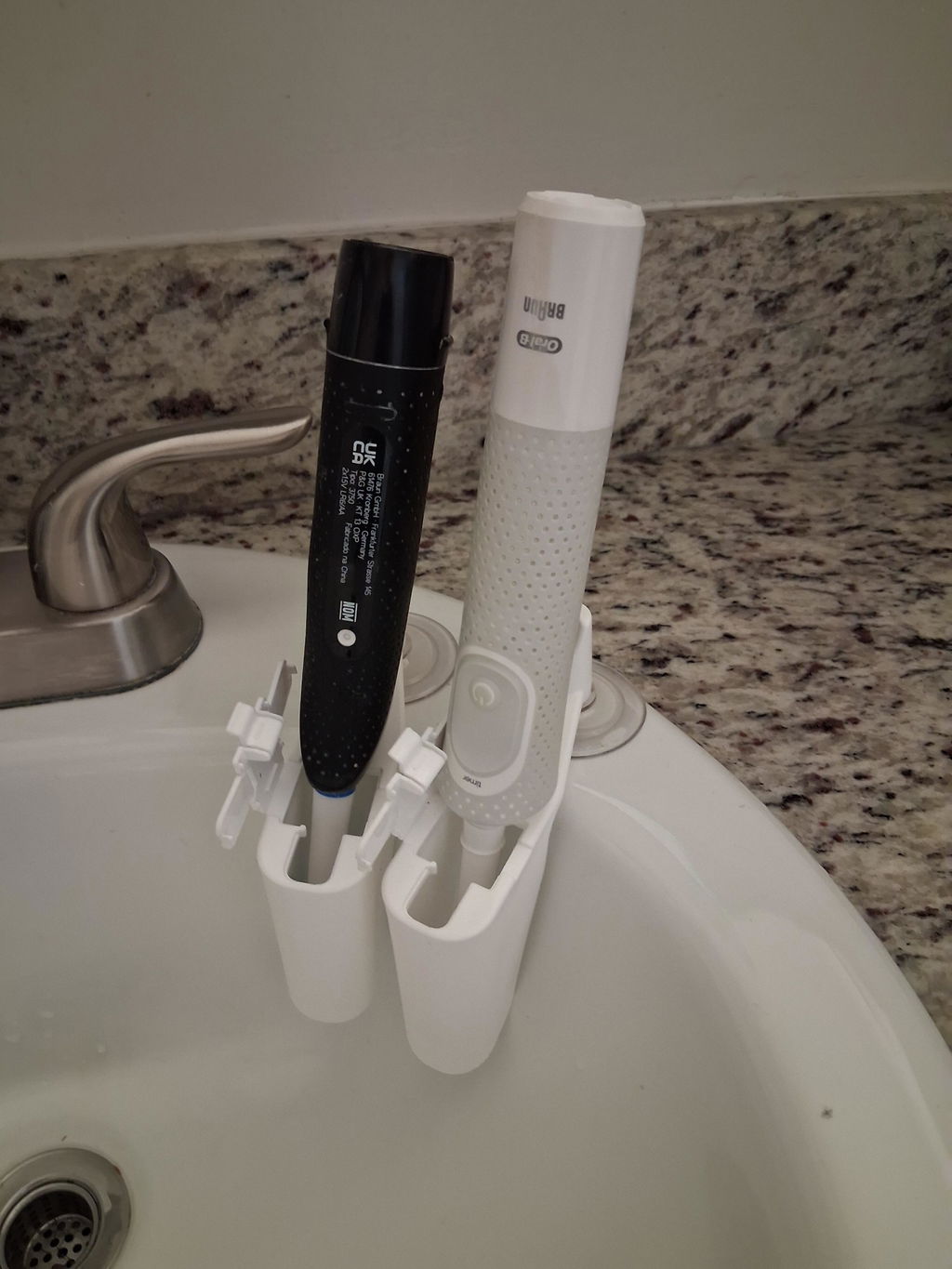
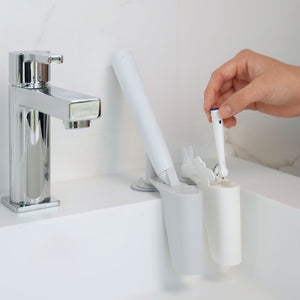
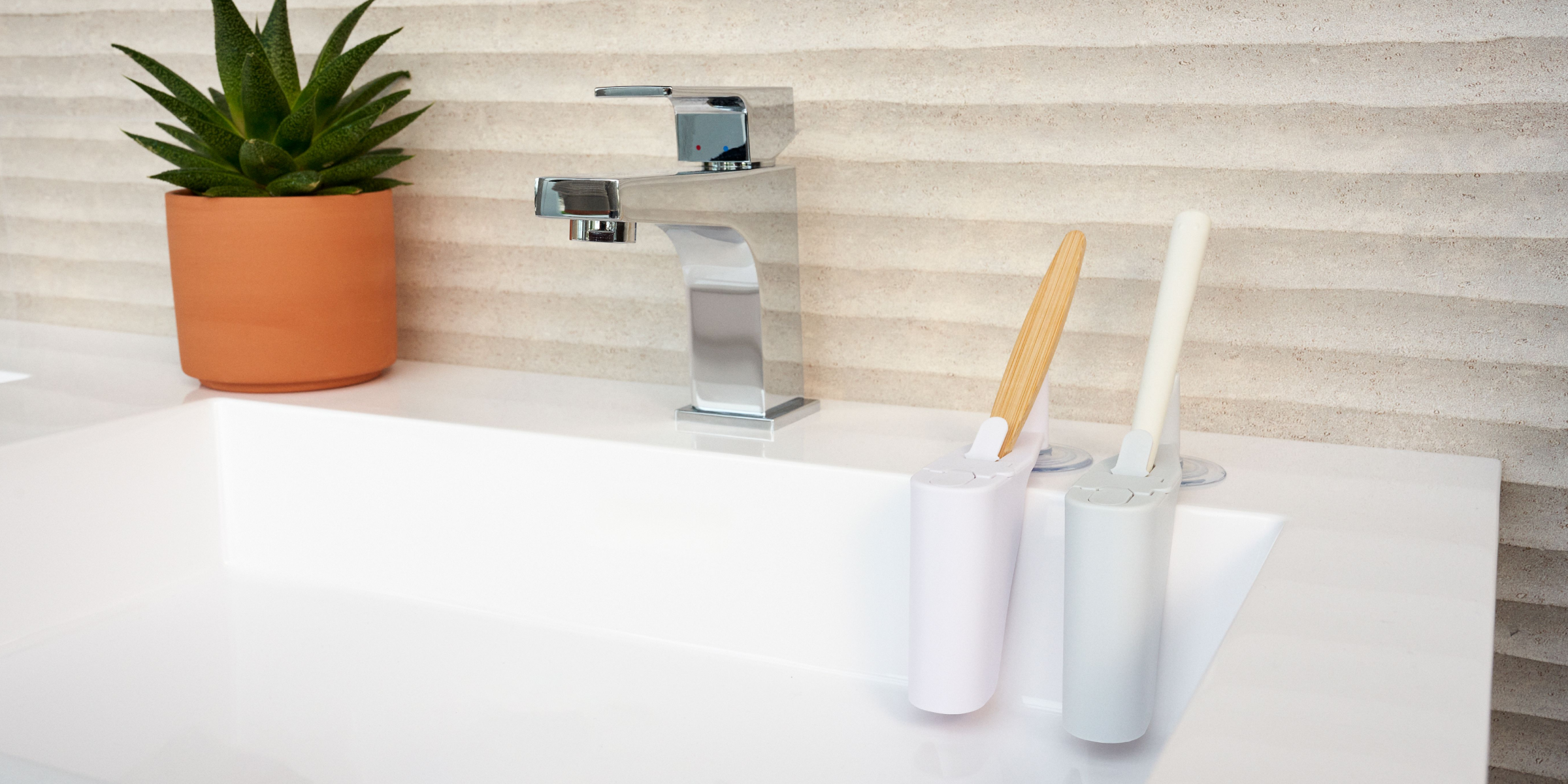
A thoughtfully designed sink-edge holder can address these issues without moving the toothbrush to the wall. NOOK, for example, uses a protective shield and cover around the toothbrush while maintaining an open design that allows airflow and drainage. The goal isn’t simply to move the toothbrush away from the counter. It’s to create a better environment for storing it between uses.
How water leaves the brush
Your toothbrush is still wet after you finish brushing, even after you give it a shake. What happens to that remaining moisture is one of the most important differences between holder designs.
Traditional cups and enclosed trays can collect the water that drips from a toothbrush. Over time, moisture can accumulate at the bottom, creating another surface that needs to be regularly cleaned. Wall-mounted designs don’t automatically solve this problem either. If the design catches dripping water in a cup or tray, that water still has somewhere to collect.
A different approach is to design the holder around the sink itself.
NOOK holds the toothbrush upside down over the basin so remaining water can drip directly into the sink rather than collecting inside the holder. Its open back and bottom also allow air to circulate around the toothbrush while it dries.
That’s ultimately what matters: giving moisture a clear path out instead of creating another place for it to collect. Whether a holder is mounted to the wall or positioned at the sink edge matters less than how well the design manages the water left behind after brushing.
Cross-contamination between brushes
Households with multiple brushes face a problem that single-brush households don’t. When brushes touch each other, microorganisms move between them. The transfer is small but real, and it accumulates.
Shared cups, whether countertop or wall-mounted, store brushes close together, often with bristles touching. Multi-slot designs help only if the slots have real space between them.
Individual holders, one per brush, solve separation regardless of where they sit. Two holders side by side on the sink edge give the same physical separation as two holders mounted at different heights on the wall, without drilling, adhesive, or asking a landlord for permission.
Cleaning the holder
A holder is only as clean as it gets cleaned. Both mounting styles need maintenance, but enclosed designs need more of it no matter where they’re installed.
Cups and tubes with interior surfaces tend not to get cleaned until the bottom turns visibly gross. Wall-mounted versions of the same cup design have the same problem. Some wall mounts are harder to remove for cleaning, which makes it worse, not better.
Open designs with no enclosed chamber rinse in seconds whether they sit on the counter or the sink edge. Simple structure matters more than mounting point.
Why countertop and sink-edge often win
Wall-mounting adds friction most households don’t need. Drilling requires permission. Adhesive mounts fail on tile, peel paint, and create move-out headaches. Suction hooks on bathroom walls slip in humidity. And if the holder itself is a cup with a tray, all of that installation effort went into mounting the wrong design.
Countertop doesn’t have to mean a gross cup on the vanity. A holder on the sink edge keeps the brush over the basin, lets water drip away, and attaches to the sink itself rather than the wall. No holes, no adhesive on tile, no wall-mount product fighting gravity in a steamy room.
The comparison that actually helps: not wall versus counter, but open drip-dry versus enclosed reservoir. A well-designed holder on the sink edge beats a wall-mounted cup with a pooling tray. A cheap counter cup loses to almost everything.
When you’re choosing, ask whether water drains into the sink, whether each brush has its own space, and whether every surface is easy to rinse. Those questions matter more than whether the holder is attached to tile or sitting on the rim.
Open, drip-dry design that works on the sink edge, no matter where you put it. Shop the Nook toothbrush holder →