


The Best Toothbrush Holder Isn't What You Think It Is | NOOK
Most people pick a toothbrush holder the way they pick anything else for the bathroom. Something that fits the counter, matches more or less, and doesn’t cost much. That’s not a bad approach. The hygiene part gets skipped almost entirely.
That’s partly because a toothbrush holder seems like a solved problem. It holds a toothbrush. But there’s a specific thing most holders do, or fail to do, that shows up clearly after a few months of use.
What “best” actually means
Four things separate a good toothbrush holder from a bad one. Most products on the market get two of them right.
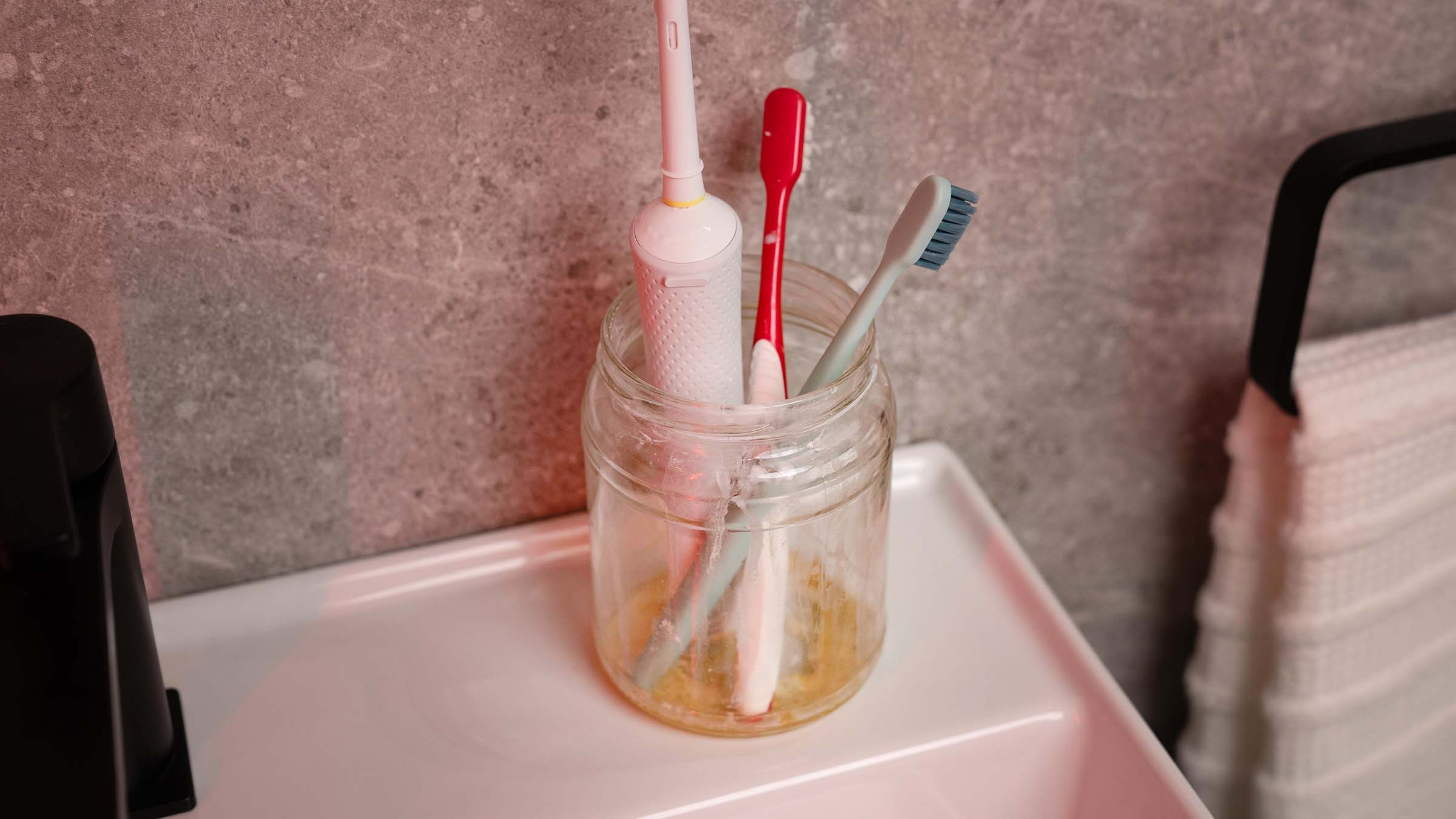
Drainage comes first. Your brush comes out of your mouth wet. Water runs down the handle and collects wherever the brush is sitting. In a cup, that water doesn’t go anywhere. It pools at the bottom, stays in contact with the base of the bristles, and that’s where buildup starts. Not because the bathroom is particularly dirty, but because standing water and toothpaste residue in an enclosed space don’t need much help.
Airflow is the second issue. A bristle head that stays damp inside an enclosed space dries much slower than one with air moving around it. Cap-style covers (the kind that snap over the brush head) are often worse than no cover at all. They seal in moisture. By the next morning, the bristles may not have dried.
Splash protection matters too, though it’s less obvious. An open cup leaves the brush head exposed to faucet spray, aerosols, and whatever circulates in the room. Some barrier around the head is worth having. Not a tight seal, which kills airflow, but enough coverage to reduce direct exposure.
Cleanability is the last one. A holder with interior tubes and small crevices tends not to get cleaned, which defeats the point. Design simplicity here is functional, not just aesthetic.
What most holders actually do
Run the cup on your counter against those four criteria. No drainage, no airflow, no splash protection. Water from the brush collects at the bottom. The bristle head sits exposed at counter level.
Wall-mounted rings are a step up (the brush at least isn’t sitting in pooled water) but still offer no splash protection and tend to be awkward to clean. Enclosed cap cases flip the problem: decent splash protection, almost no airflow. If you’re using one as a daily holder, the bristles are staying wetter than they need to.
Multi-head caddies compound things. Multiple heads in a shared enclosed space, everything draining into the same spot. None of these were designed around drying. They were designed around storage.
What to look for instead
You don’t need a complicated product. A good holder is actually simpler than most. It does less in terms of enclosure, and more in terms of how water moves away from the brush.
The design logic: brush head elevated, water dripping away from the bristles rather than pooling below them, some barrier against direct splash, and a structure simple enough to actually get cleaned.
NOOK was built around this. The shield protects against splashback without sealing the brush in. The holder positions the brush to drip-dry directly into the sink rather than into a cup beneath it. It fits most manual and electric handles, and there’s nothing to disassemble.
Before buying anything: does water drain away from the bristles, or does it pool somewhere? Is the brush head exposed to airflow? Is there any splash barrier? Can every surface be cleaned without tools? Does it fit your handle? Electric handles are wider than most holders assume.
If a holder can’t clearly answer those, it was built for storage, not hygiene. Most of what’s on the market was.
NOOK is a hygienic toothbrush holder designed to drip-dry into your sink and protect against splashback. Works with most manual and electric toothbrushes. Shop NOOK →