


Sharing a Bathroom? How to Store Toothbrushes Without Spreading Germs
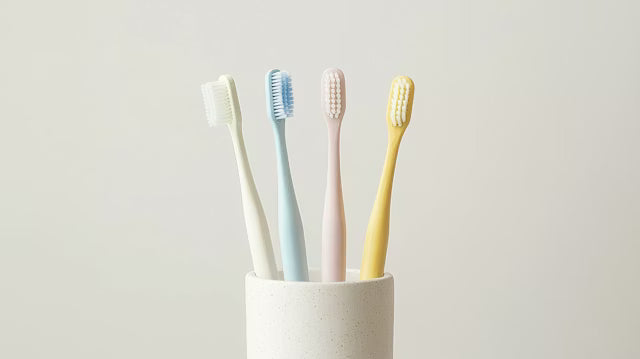
Most shared bathroom setups use a single cup. All the brushes go in together, handles touching, and every brush drips into the same pool of water at the bottom.
It’s convenient. It’s also one of the more reliable ways to share what you’d rather keep to yourself.
The problem with the shared cup
When toothbrushes are stored together in a cup, a few things happen.
The brushes touch. Bristle-to-bristle or handle-to-handle contact transfers bacteria between brushes. Brushing sometimes causes minor gum bleeding, and bacteria present in that contact can move from one brush to another.
The water pools. Every brush drips after use. In a cup, that water collects at the bottom and all the brushes sit in it. Whatever one brush brings in joins the pool that every other brush is soaking in.
The drying slows. Multiple brushes in a cup create a more humid environment than a single brush in open air. They stay wetter longer, and wet bristles are better conditions for buildup.
None of this is catastrophic for a healthy household. But none of it is necessary either.
Separate storage for each person
Individual holders for each brush fix all three issues at once. Not a multi-slot cup where brushes share the same enclosed space, but separate positions where each brush dries on its own and nothing touches.
Wall-mounted individual holders are good for this. Each brush gets its own spot, none of them share a pool at the bottom, and they all get better airflow than brushes packed into a single cup.
If counter space is tight, vertical holders with clearly separated slots work better than cup-style holders, as long as the slots are wide enough that brushes aren’t pressed together.
What to watch for in family setups
Kids’ brushes and adult brushes should be stored separately, not in the same container. The bacteria loads are different, and kids are generally more susceptible to whatever gets transferred.
If anyone in the household is sick, their brush should come out of the shared holder until they’re recovered. A brief illness working its way through a household is a familiar pattern, and shared toothbrush storage is a route most people don’t think about.
For households where someone has a compromised immune system, the case for individual, open-air storage is stronger.
For couples and roommates
Two people sharing a counter have the simplest version of this problem. Two individual holders placed side by side give each person their own storage without taking much space.
The brushes shouldn’t share a pool of water at the base, and they need enough separation that they’re not touching. Two NOOK holders side by side do that while taking up less counter space than a single cup holding two brushes.
The thing that matters less than you’d think
The shape and material of the holder matters less than whether brushes are sharing moisture and contact. A beautiful ceramic cup holding four brushes creates worse hygiene conditions than four separate plain holders. The aesthetic comes second.
NOOK stores each brush individually, drip-dries into the sink, and takes up less counter space than a cup. Works with most manual and electric toothbrushes. Shop NOOK →