


How to Clean a Toothbrush Holder | NOOK
The toothbrush holder is one of the most consistently neglected surfaces in the bathroom. It gets moved, wiped around when you clean the counter, and otherwise ignored for weeks at a time. Meanwhile, water from wet brushes drips into it after every use, and that steady moisture is exactly what mold and bacteria need.
Research consistently shows 64% of toothbrush holders carry yeast and mold. That’s not a fringe result. It’s the predictable outcome of a surface that gets wet twice a day and rarely gets cleaned.
Why holders get dirty so fast
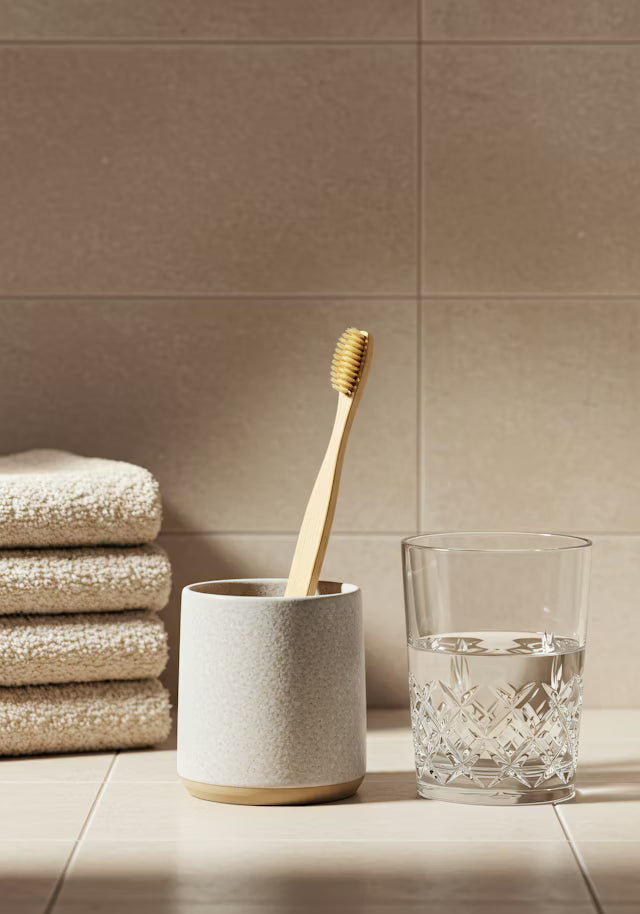
Most holder designs work against staying clean. Cups and tubes have interior surfaces that stay damp after the brush goes in. Residue from the handle and bristles builds up at the bottom. If the holder has multiple slots, every brush contributes to the same damp environment.
It gets worse because most holders sit right at the sink, catching water and toothpaste residue from brushing. The inside of the holder isn’t visible during normal bathroom cleaning, so it gets wiped around but not actually cleaned out.
Most bathroom surfaces dry out between uses. A toothbrush holder gets replenished with moisture every time someone brushes.
How often to clean it
Once a week is the minimum for most households. If multiple people share the same holder, more often makes sense. If you’ve had a cold or illness, clean it when you replace your brush.
The weekly timeline isn’t arbitrary. A damp surface left for more than a few days starts developing the conditions for visible buildup. By the time you notice discoloration at the bottom of a cup, it’s been accumulating for longer than most people realize.
How to clean it
You probably have everything you need already.
Start with hot water and dish soap. Remove the holder, rinse it, then scrub every interior surface with a bottle brush or old toothbrush. The interior of a cup or slotted holder has curved surfaces a flat cloth won’t reach. A narrow brush makes a real difference.
For visible buildup or discoloration, soak it for 10 minutes in equal parts white vinegar and water before scrubbing. Vinegar breaks down mineral deposits and kills mold without leaving a chemical residue.
If the holder is dishwasher-safe, that’s the easiest option. Check the bottom for a symbol, or look up the brand if you’re not sure.
After cleaning, let it dry completely before putting brushes back in. Upside down on a clean towel for 20 minutes does it.
What makes a holder harder or easier to maintain
The design of the holder is what determines how much effort the weekly clean actually takes.
Holders with tight interior tubes, narrow slots, or a solid base that traps water take more effort. You need specific tools to reach the interior, and skipping a week catches up quickly.
Simpler, more open designs clean faster. No enclosed chamber means a quick rinse with soap and water covers it. Less surface area for buildup to start means less to deal with when it does.
NOOK has no cup, no interior tube, and no reservoir collecting water at the base. The brush drip-dries into the sink, so far less accumulates on the holder itself. Cleaning it takes about 30 seconds.
When to replace the holder entirely
Cracks, deep discoloration that won’t clean out, or material that feels tacky or degraded: replace it rather than try to clean it. Certain plastics and ceramics can harbor mold in surface damage that scrubbing can’t reach.
If you’ve been using the same cup or caddy for several years and it never quite looks clean after washing, that’s usually the material rather than the cleaning method. Starting fresh is the right call.
NOOK is a hygienic toothbrush holder that drip-dries into your sink with no cup or reservoir to clean out. Works with most manual and electric toothbrushes. Shop NOOK →