



Do You Actually Need a Toothbrush Holder With a Cover?
People search for covered toothbrush holders for the same reason they cover leftovers. A toothbrush sits out in a bathroom for hours, picking up whatever the room throws at it. A cover seems like the obvious fix.
It’s a reasonable instinct. The problem is that most covered holders solve one problem and create another.
What a cover is actually protecting against
There are two real concerns. The first is splash from the sink, which is closer to the brush than people realize. The second is airborne particles from flushing a toilet without the lid down, which has been measured to land on bathroom surfaces several feet away.
A cover blocks both of these. That’s a real benefit, and it’s why the search volume for covered holders is as high as it is. People aren’t wrong that some kind of barrier helps.
Where sealed covers go wrong
The issue is what happens after you put a wet brush behind a sealed cover.
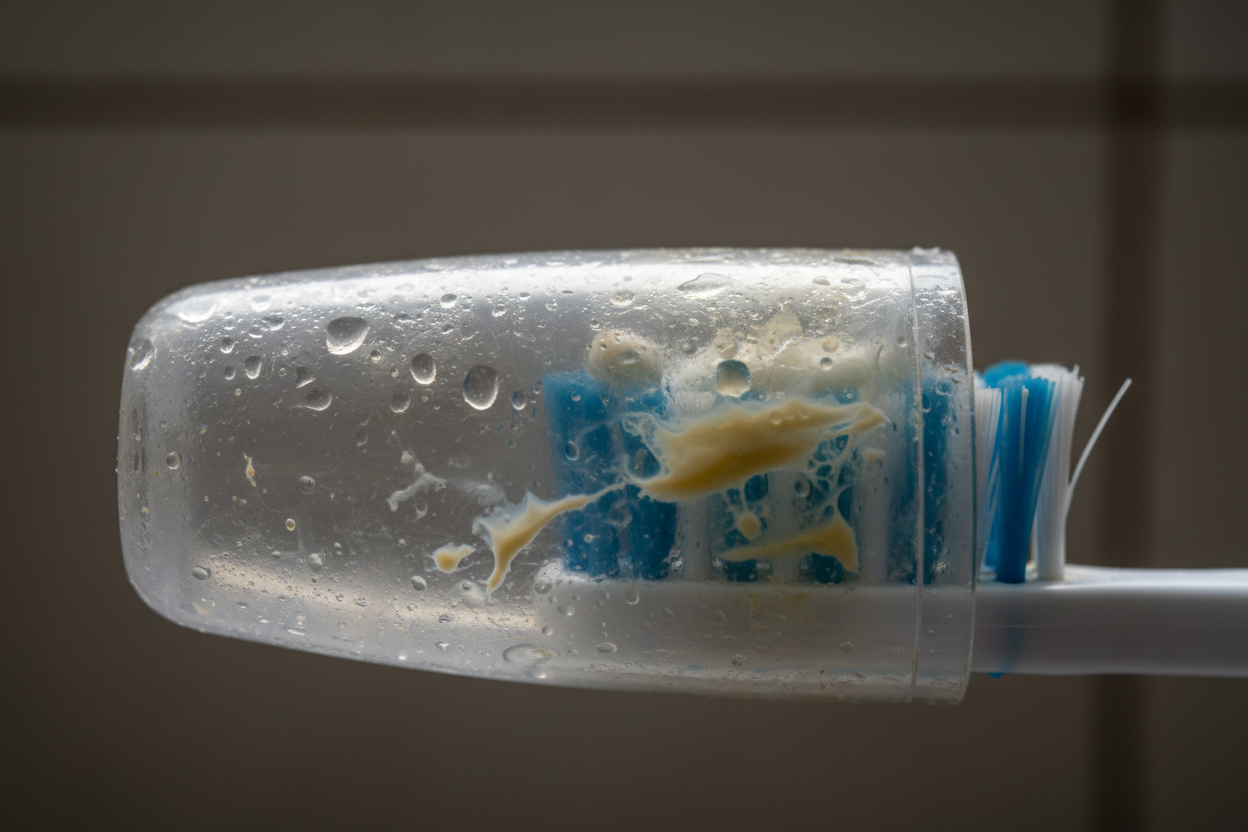
A toothbrush comes off the head soaked. If the cover is airtight, that moisture has nowhere to go. The bristles stay damp for hours, and damp bristles in a still, enclosed space are the exact conditions that mold and bacteria prefer. You’ve solved an exposure problem and created a humidity problem.
This is the same reason travel cases get gross faster than open holders at home. Containment without airflow makes things worse, not better.
The difference between a cover and a shield
The useful distinction is between sealing the brush in and shielding it from above.
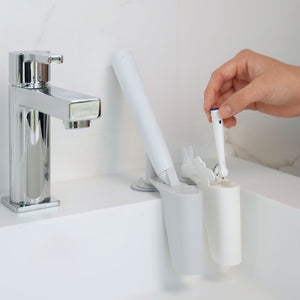
A sealed cover encloses the brush on all sides. It blocks contamination and traps moisture in equal measure. A shield, by contrast, blocks the direct line of contamination from above and the sides while leaving the bristles open to air. The brush still dries between uses. Splash and airborne particles still can’t reach it.
This is the design choice that matters. Most “covered toothbrush holders” on the market are sealed enclosures. The ones worth owning aren’t covers at all in the strict sense. They’re shields.
What to look for if you want protection
A few things separate a covered holder that helps from one that quietly makes things worse.
Ventilation is the first. If the cover doesn’t allow air to circulate around the bristles, the brush stays wet. Look for designs with open sides, a vented top, or a gap between the brush head and the cover material.
Drainage is the second. Water from a wet brush has to go somewhere. If it pools at the bottom of the holder, the brush is sitting in standing water for hours. The better designs let water drain away from the brush entirely, ideally into the sink rather than into a reservoir you have to clean.
Material matters less than the design, but it isn’t nothing. Non-toxic, food-grade, or medical-grade materials are worth paying attention to, especially for a product that sits next to something going in your mouth twice a day.
The case against the standard covered cup
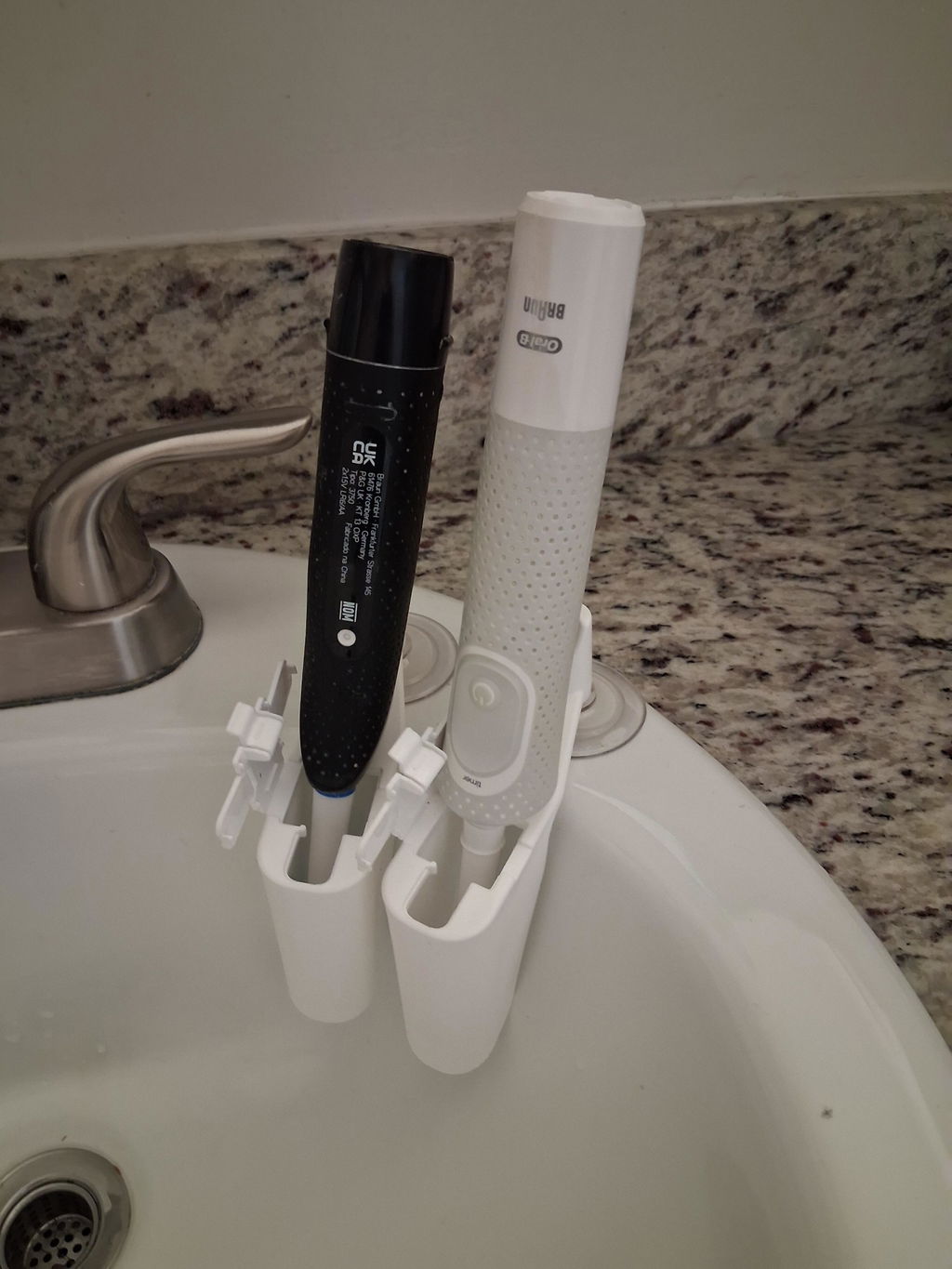
The most common covered holder is a cap with a hinged lid. It looks tidy, costs almost nothing, and is functionally the worst of both worlds. Wet brushes drip into the cap, water pools at the bottom, and the lid seals the whole thing shut while it ferments.
If you’ve ever opened a covered cup holder after a week and noticed the smell, that’s what’s happening. Not a maintenance failure, a design failure. The product was built to look clean, not stay clean.
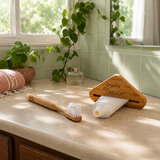
Shielded from splash, open to airflow. The Nook toothbrush holder is a shield, not a sealed cover. Shop the Nook toothbrush holder →