






What Makes a Good Electric Toothbrush Holder
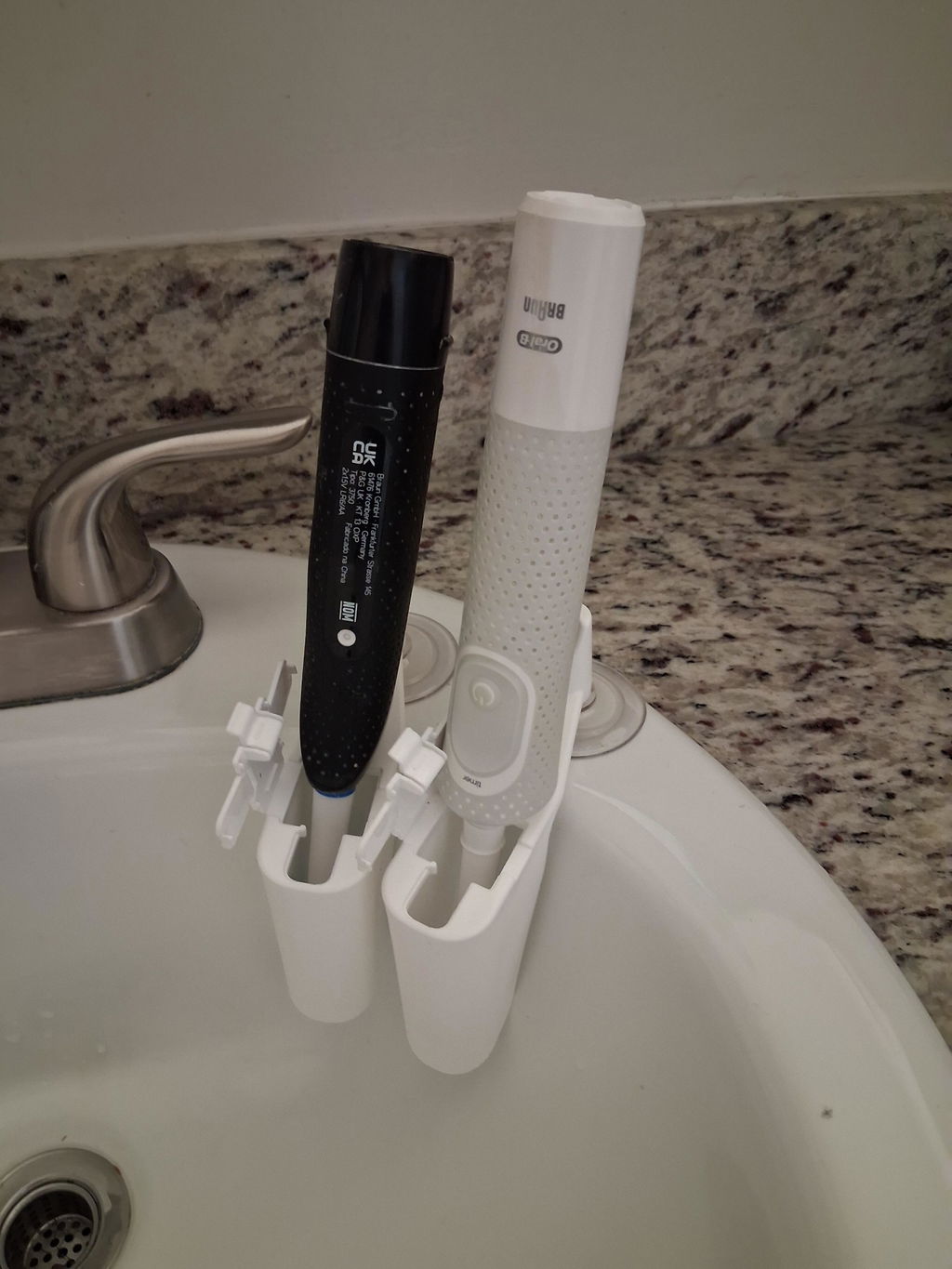
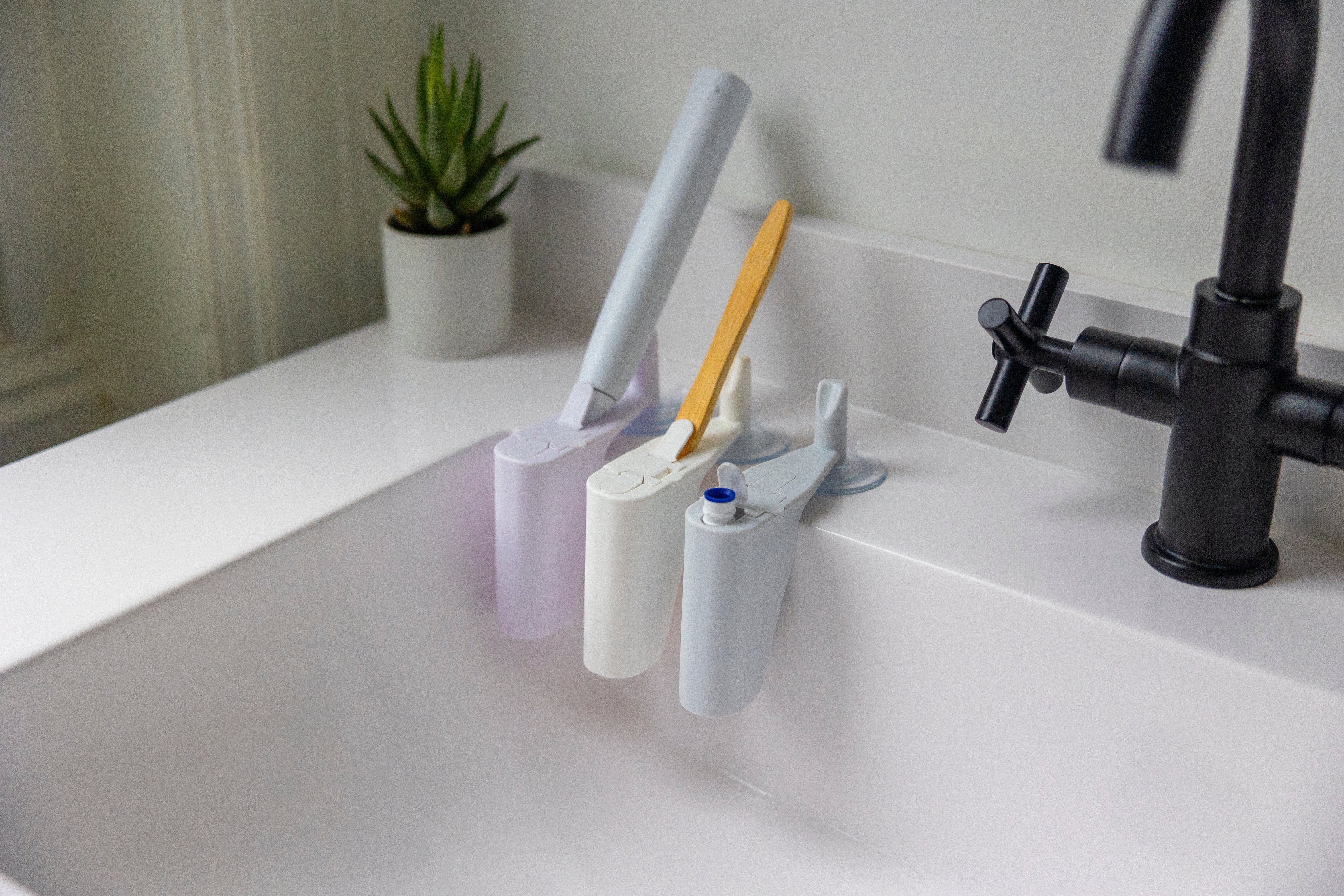
A good electric toothbrush holder does three things: it fits the brush you actually own, holds a heavy, top-heavy brush upright without tipping, and drains water away from the brush instead of pooling it around the handle base. Sink-edge holders that grip the handle and drain into the basin usually do all three well.
Most toothbrush holders were designed for manual brushes. Electric brushes are heavier, top-heavy, wider at the head, and often warm or wet at the base from charging. Storage that works fine for a $4 manual brush doesn’t necessarily work for a $100+ electric one.
The result is a category of holder that exists mostly by accident. Cups marketed for “electric and manual” brushes are usually just cups that happen to be wide enough at the opening. That’s not the same as being designed for the actual brush.
Why don’t regular toothbrush holders work for electric toothbrushes?
Regular holders fall short because they weren’t built for an electric brush’s weight, wider head, or wet handle base. Three things tend to go wrong.
Weight: the brush tips over
An electric brush is bottom-heavy when standing upright, which sounds stable. But the head and neck still create enough leverage that a brush in a shallow cup will tip with a light bump. If the holder doesn’t grip the handle, the brush falls against the counter or into the sink.
Head size: the bristles get crushed
Electric brush heads are wider than manual ones, and the brush usually has a thicker neck. Narrow slots and tight tubes that work for manual brushes either don’t fit electric heads at all or grip them so tightly that the bristles get crushed.
Moisture: water pools at the handle seam
Electric brushes spend their downtime upright on a charging base, then get used and put back wet. If the holder traps water around the base of the handle, the handle stays damp around the seam where the head attaches. Water and toothpaste tend to collect where the brush head meets the handle, so that seam is worth rinsing.
What should good electric toothbrush storage do?
Good electric toothbrush storage holds a heavy brush upright without tipping, gives the head room to dry without crushing the bristles, and doesn’t pool water around the handle base. That sounds simple. It eliminates most of the market.
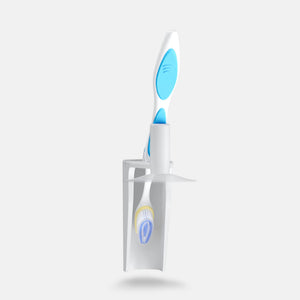
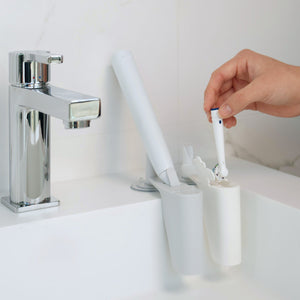
- A sink-edge holder that grips the handle solves the tipping problem.
- An open-bottom design that drains water away from the brush, not into a reservoir, solves the moisture problem.
- A wide enough opening, or an open form factor that doesn’t compress the bristles, solves the head problem.
The holders that get all three right are not the ones with the most features. They’re usually the ones with the simplest design.
Is it okay to store an electric toothbrush on its charger?
It works, but it has tradeoffs. Most people use the charger as a stand, and a charging base catches the water that drips off the brush.
The bristles dry, but the handle base stays in contact with whatever pools at the bottom of the charger. If the base of the brush stays wet on the charger, you may notice discolored residue building up there over time.
The fix is to let the brush drip-dry upright for a while before you put it back on the charger. A holder that handles the wet phase separately from the charging phase keeps the charger clean.
What should you look for in an electric toothbrush holder?
Look for a holder that fits your brush, drains water away from the brush rather than into the holder, and stays upright with the weight of an electric brush in it.
- Choose sink-edge over countertop cups. Sink-edge holders that grip the handle and drain into the basin tend to do all three well. Countertop cup holders are usually the wrong tool for electric brushes, no matter how the packaging is labeled.
- Check that a “drying holder” really dries. Some holders are advertised as drying holders for electric brushes. The ones worth buying have a real airflow design, not just a hole at the bottom of an otherwise enclosed cup.
What is the best routine for storing an electric toothbrush?
Leave the brush in a drip-dry holder after brushing, then return it to the charging base once the head is dry. That keeps the charger free of residue and the brush ready to use without sitting wet against any surface.
Sized for wider electric handles and built to drip-dry, not trap water at the base. Shop the NOOK Toothbrush Holder →