



Why Many UV Toothbrush Holders May Not Be the Hygienic Solution You Think
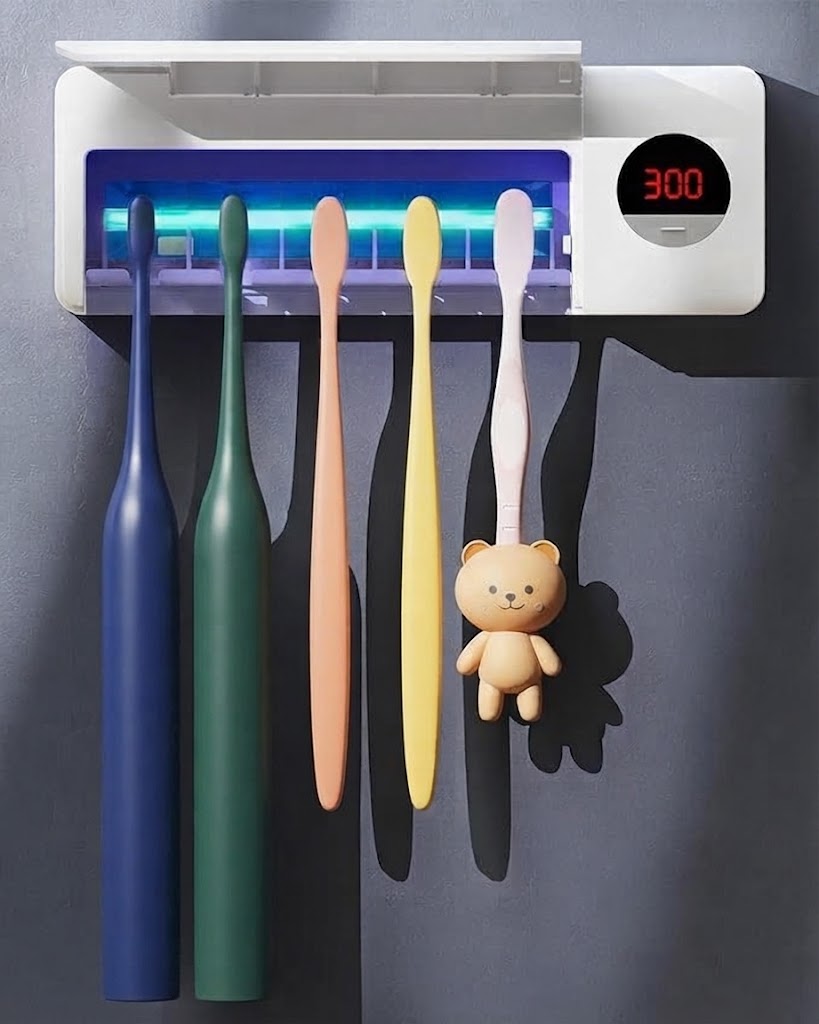
Many UV toothbrush holders are less hygienic than they look because the light only runs for a few minutes, and the wet toothbrush often stays in a closed chamber with little airflow. Moisture helps bacteria survive on a toothbrush, so how well a toothbrush dries between uses matters more than a short sanitizing cycle.
Walk down any store aisle or browse online, and you’ll find dozens of toothbrush holders claiming to sanitize your toothbrush with UV or blue light. Place the brush inside, close the lid, wait a few minutes, and it is supposedly clean. But few people ask one question: what happens after the light turns off?
How long does a UV toothbrush sanitizer actually work?
A UV toothbrush holder only works while the light is on. Many UV holders run a short cycle of a few minutes, then the brush sits in the closed case for the rest of the day.
The problem is that your toothbrush is rarely dry after brushing. It’s still wet from rinsing. When that moisture is trapped inside an enclosed holder with limited airflow, it can create conditions that encourage microbial growth over time.
Why is moisture bad for your toothbrush?
Moisture helps bacteria survive on a toothbrush. In lab studies, bacteria lasted longer on brushes kept damp, and covered, moist brushes grew more bacteria than brushes left open to dry. The American Dental Association recommends storing toothbrushes upright after use and letting them air dry.
A toothbrush that stays damp inside an enclosed container may take significantly longer to dry than one exposed to open air. The result can be:
- Extended moisture retention
- Reduced airflow
- A warm, enclosed environment
- Conditions that may support mold, mildew, or bacterial growth if the holder is not cleaned regularly
The sanitizing cycle may be over in minutes, but the toothbrush could stay damp for hours.
Are blue light and UV toothbrush sanitizers the same thing?
No. Products advertise “blue light,” “UV light,” or “UV sterilization,” and these terms are often used interchangeably, even though they are not the same.
For UV technology to effectively inactivate microorganisms, several factors matter:
- The wavelength of the light
- The intensity (dose)
- Exposure time
- Distance from the toothbrush
- Whether all surfaces are exposed to the light
If any of these is insufficient, effectiveness can drop sharply. Results for UV sanitizers are mixed. In one lab study, a UV toothbrush sanitizer reduced bacteria less than hydrogen peroxide or mouthwash. School and child care guidance says UV is not necessary, and the ADA suggests looking for an FDA-cleared device if you use a sanitizer.
Can UV light reach every part of a toothbrush?
Not fully. UV light only works where it can reach, and even high-quality UV systems have this limitation.
Toothbrush bristles overlap and create tiny shadows the light cannot penetrate effectively. That means parts of the toothbrush may get significantly less exposure than others.
Does airflow matter for toothbrush hygiene?
Yes. Whether or not a holder uses UV technology, a toothbrush should be allowed to dry thoroughly between uses, and airflow is what makes that happen.
Good airflow helps moisture evaporate naturally, so the toothbrush stays wet for less time. The ADA says storing a moist toothbrush in a closed container promotes microbial growth more than leaving it in open air.
How is NOOK different from a UV toothbrush holder?
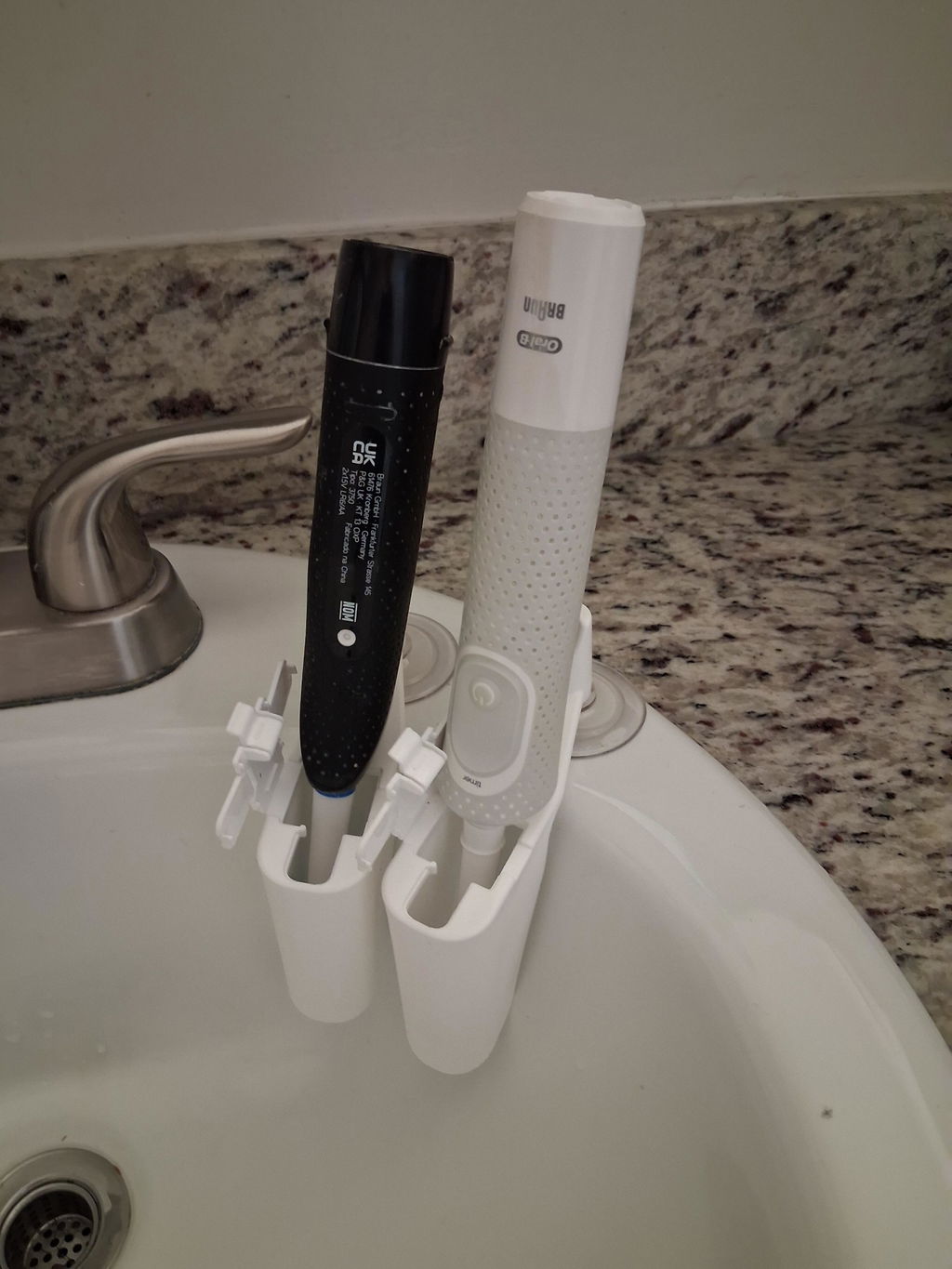
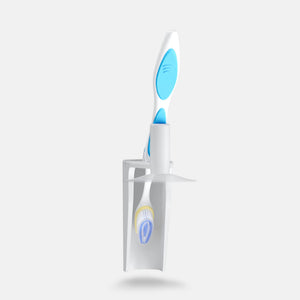
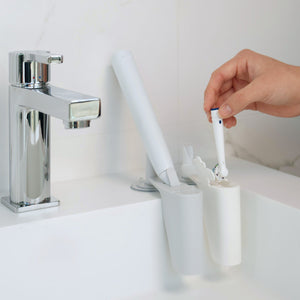
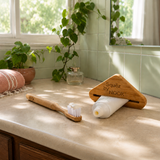
NOOK skips the closed chamber and focuses on drying. At NOOK, we believe the simplest solution is often the smartest one.
Instead of enclosing your toothbrush, NOOK is designed to:
- Promote continuous airflow
- Allow water to drip directly into the sink
- Help the toothbrush dry naturally
- Keep the toothbrush elevated and organized
- Eliminate the need for batteries, charging, electronics, or timed sanitizing cycles
Rather than relying on a few minutes of light, NOOK creates an environment that supports proper drying throughout the day.
Key takeaways: is a UV toothbrush holder worth it?
UV technology has legitimate uses in healthcare, laboratories, and water treatment when it is engineered to deliver the right wavelength, intensity, and exposure. But not every consumer toothbrush holder performs at that level, and no UV device removes the need to let a toothbrush dry completely.
Good toothbrush hygiene isn’t just about a short sanitizing cycle. It’s about the rest of the day.
A toothbrush that stays dry is a toothbrush that’s better positioned to stay cleaner.
Skip the closed chamber. The NOOK Toothbrush Holder keeps air moving and water dripping into the sink, so your brush can dry between uses. Shop the NOOK Toothbrush Holder →