



What to Look for in a Travel Toothbrush Holder | NOOK
Travel toothbrush cases feel like a good idea. You want to protect the bristles in your bag, keep the brush off whatever else is in the bottom of your toiletry kit, not end up using something that’s been rolling next to your deodorant for three days.
Reasonable. But most travel toothbrush cases create a hygiene problem that’s worse than not using a case at all.
The problem with most travel cases
Standard travel cases are sealed containers. You rinse your brush, shake it off, and slide it into a tube or clamshell cap. The cap snaps shut. The brush is “protected.”
What’s actually happening: you’ve sealed a wet brush inside an airtight container. The moisture has nowhere to go. The bristles stay damp for hours, sometimes until the next time you open the case. In a warm bag, that’s about the worst storage condition possible.
This is what most travel cases do by design. They were built around containment, not drying. And drying is the part that matters.
Why drying is the point
At home, a good toothbrush holder keeps the brush dry between uses. The bristles have airflow. Water drips away from the head. By the next morning, the brush is dry.
On the road, most people give that up entirely. The case goes in the bag, the bag gets zipped, and the bristles don’t get a chance to dry before the next use. On a multi-day trip, this compounds.
Protection, portability, and pack size are all secondary to whether the brush can actually dry between uses.
What to actually look for
Ventilation first. Any case worth using lets moisture out: perforations, a slotted design, something that holds the brush without fully sealing it. A fully sealed cap solves the problem of things getting on the brush from outside while creating a worse problem inside. The bristles should have some exposure to air even when the holder is in your bag.
Drainage second. If the case has a solid bottom, water pools there unless you consciously leave it open to dry before packing. Most travelers skip that step.
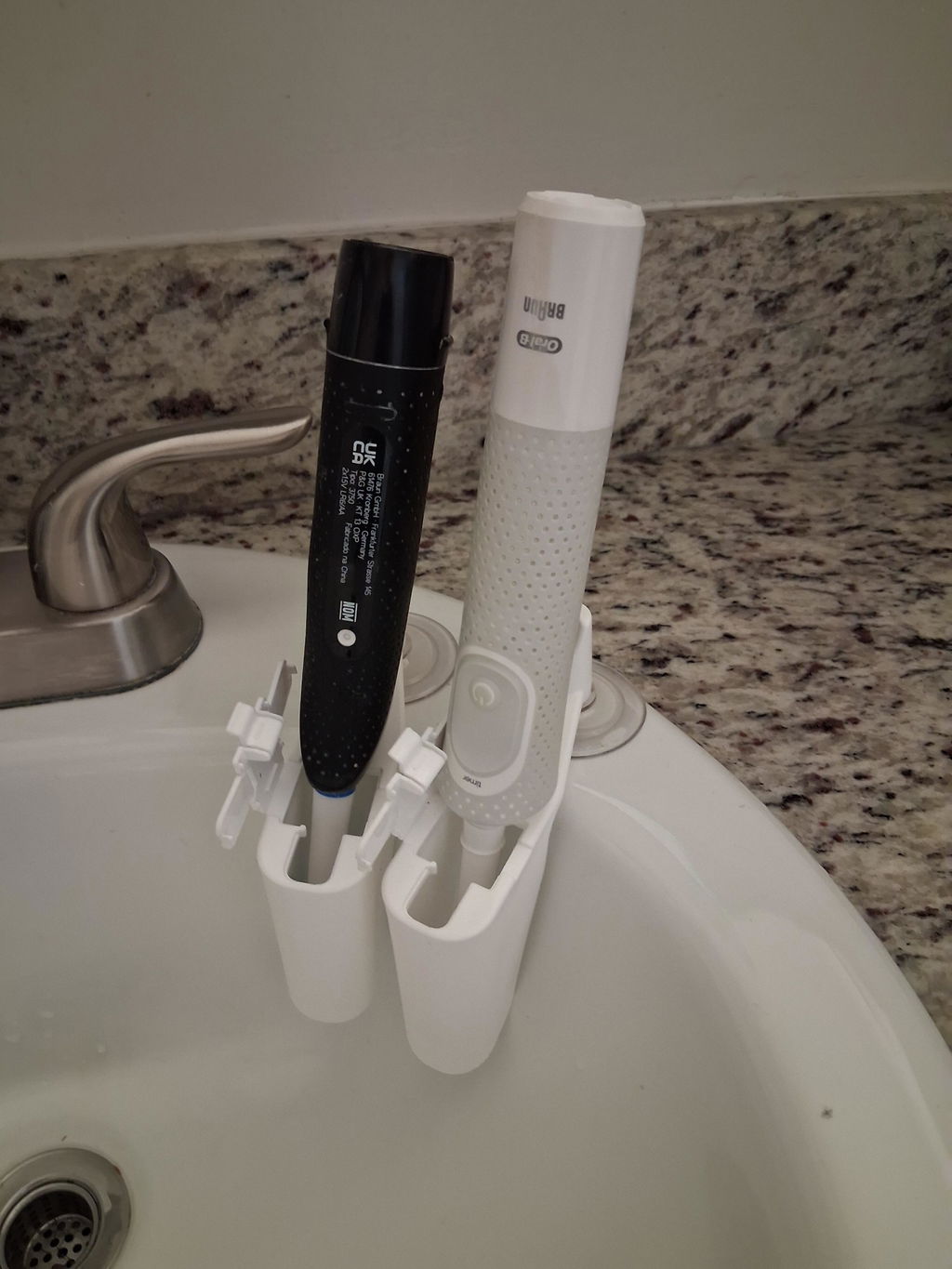
Brush fit matters more than people expect. Electric toothbrush handles are significantly wider than manual ones. Most travel cases are sized for slim manual brushes. If you travel with a Sonicare or Oral-B, check that the case actually fits the handle before buying. A loose fit is better than one where the handle is jammed in and the head is held at an angle.
Pack size and weight determine whether you actually use it. A bulky or awkward case tends to get left at home.
Habits that help on longer trips
Shake the brush firmly over the sink after brushing. A few seconds removes most of the surface moisture before it goes in the case. Leave the case open when you have counter space and don’t need things packed. A hotel bathroom for a couple of hours is enough for a brush to dry completely. When the case is in your bag, keep it vertical so moisture can drain rather than sit against the bristles.
On trips longer than four or five days, two brushes alternating days is worth the extra ounce. One dries while you use the other.
NOOK for travel
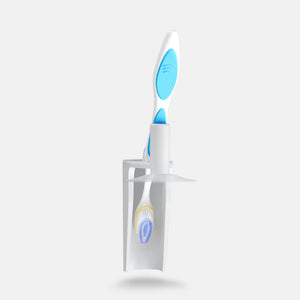
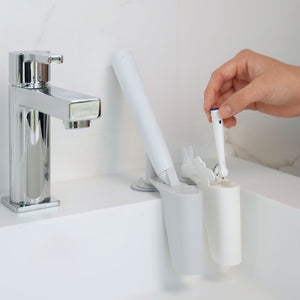
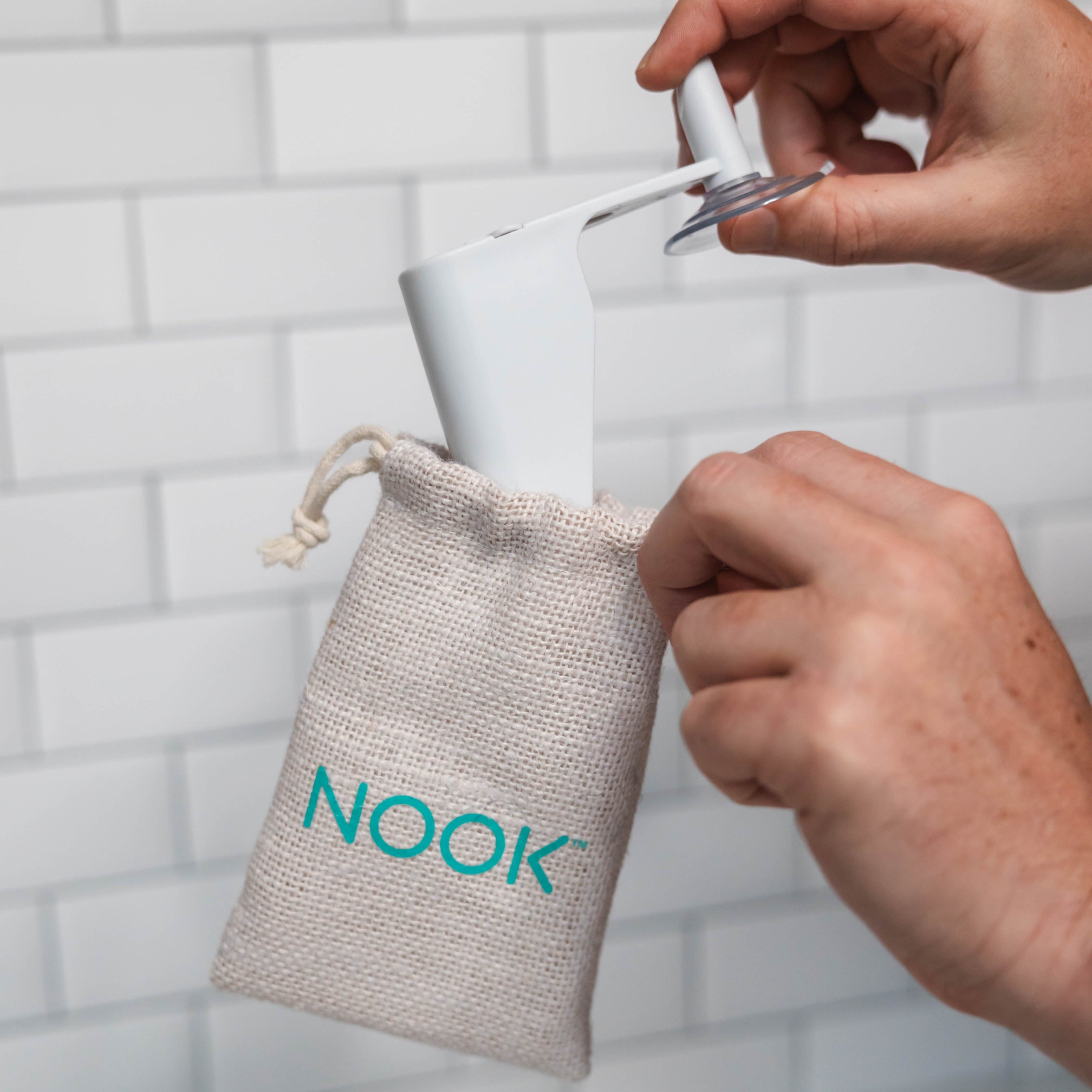
NOOK positions the brush so water runs down the handle and away from the bristles rather than pooling. At home, that means dripping into the sink. Traveling, the same design means the bristles stay drier inside the holder than they would in a sealed cap.
It’s compact enough to travel with, fits most manual and electric handles, and if you’re already using one at home, there’s no separate case to pack.
Most travel cases were built for protection in transit. A good travel toothbrush holder is built for drying.
NOOK is a hygienic toothbrush holder that works at home and on the road. Compact, travel-ready, and designed to drip-dry rather than trap moisture. Shop NOOK →