


The Toothbrush Holder That Doesn't Get Moldy | NOOK
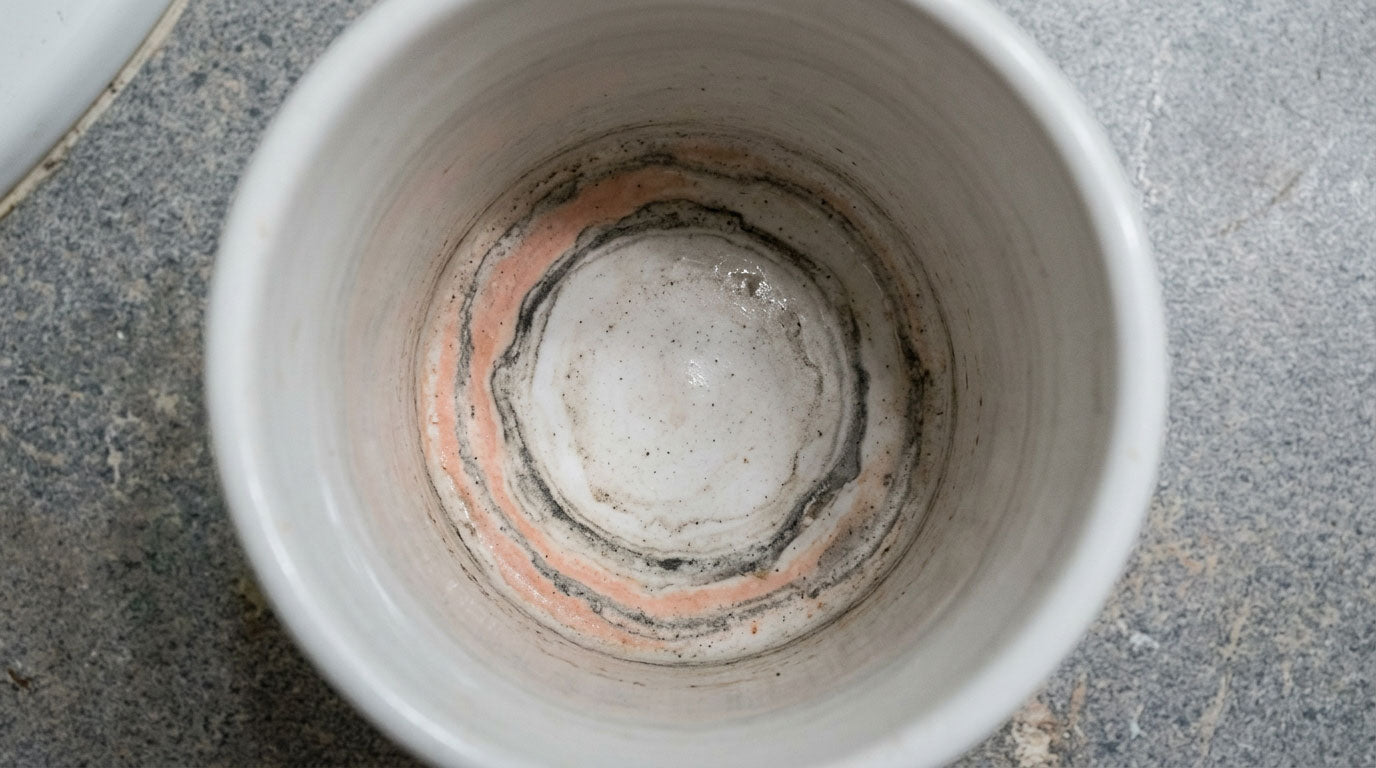
If you’ve searched for a toothbrush holder that doesn’t get moldy, you already know the problem. You buy a holder, it looks clean for a few weeks, and then you notice the pink or black film starting at the bottom of the cup. You clean it. It comes back faster than the first time. After a few rounds, you replace the holder. The new one does the same thing.
The cycle isn’t a cleaning failure. It’s the predictable result of how most holders are designed.
Why mold grows where it does
Mold needs three things. Moisture, organic material, and time. A standard toothbrush holder provides all three without trying.
Moisture comes from the brush. A wet toothbrush drips for several minutes after every use, and that water collects wherever gravity takes it. In a cup or slotted holder, that’s the bottom.
Organic material comes from the same source. Saliva, toothpaste residue, and biofilm from the brush itself all wash down with the water. The pool at the bottom of the cup isn’t water, it’s a thin solution of everything that came off the brush.
Time is what most holders give it. The interior of a cup or tube isn’t part of the normal bathroom cleaning routine. Most people clean their toothbrush holder weeks or months apart, sometimes never.
What makes a holder mold-prone
The design choices that cause mold are easy to identify once you know what to look for.
A reservoir at the base is the biggest one. Any holder that catches water at the bottom and holds it there is creating a slow-evaporating petri dish. That includes cups, tubes, and most “drainage” holders that drain into a removable tray.
A sealed top is the second. Covered holders without ventilation trap humidity around the brush. Even if the base drains, the air doesn’t move, and the bristles stay damp longer.
Tight interior surfaces are the third. The smaller and more enclosed the space, the harder it is to clean and the less airflow reaches the brush. Narrow tubes for individual brushes are some of the worst offenders here.
Material plays a smaller role than people assume. Ceramic, plastic, bamboo, and silicone all develop mold under the right conditions. The shape of the holder matters more than what it’s made of.
What a mold-resistant holder actually looks like
The fix is structural. Get the water away from the brush instead of trying to clean it up later.
The brush should drip-dry into a surface that’s already part of your cleaning routine, which means the sink. That way water runs to the drain immediately and never accumulates in the holder itself.
The brush head should have airflow on all sides. Open or shielded designs that allow air to move around the bristles dry the brush in under an hour. Sealed designs can take many hours, which is more than enough time for moisture-loving bacteria to take hold.
The holder itself should have nowhere for organic material to collect. No cup, no tube, no narrow channel. The fewer enclosed surfaces, the less buildup possible.
Why the reddit thread is unanimous
If you’ve gone down the rabbit hole on r/BuyItForLife or similar threads asking for a toothbrush holder that doesn’t get gross, the responses converge on the same answer. Wall-mounted, open, no reservoir.
It’s not coincidence. The hygiene problem is so consistent across cup-style holders that anyone who’s owned a few eventually figures out that the design is the issue. The recommendations from people who’ve solved this problem are almost always the same shape.
How NOOK addresses it
NOOK has no cup. No interior tube. No reservoir. The brush sits in a holder mounted to the wall or sink edge, the head shielded from direct splash, the bottom open to the sink below. Water drips from the brush directly into the sink. It doesn’t collect anywhere.
There’s no enclosed chamber for moisture to sit in, no inner surface that stays damp, and nothing to clean out at the bottom because there’s no bottom to clean. The holder itself rinses in about 30 seconds when you do clean it, which most people end up doing during normal counter wipe-downs rather than as a separate task.
A brush in NOOK is dry by the time you go to use it again. Mold needs moisture to grow, and there isn’t any.
NOOK is a hygienic toothbrush holder designed to stay dry. No cup, no reservoir, no mold. Works with most manual and electric toothbrushes. Shop NOOK →