





Meet the Offenders of Toothbrush Storage: How They Threaten Your Oral Health
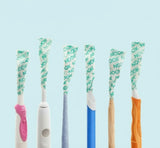
The four worst toothbrush storage mistakes are the Crust-er (mold and residue at the base of an electric toothbrush), the Cap-er (caps and covers that trap moisture), the Sink-er (a brush left exposed on the sink) and the Cup-er (a shared cup that collects mildew and spreads germs). Each keeps your brush damp or exposed to germs.
You might be inviting germs into your mouth every time you brush. The culprit is often not the toothbrush itself, but how and where you store it.
Why does mold form at the base of an electric toothbrush? (The Crust-er)
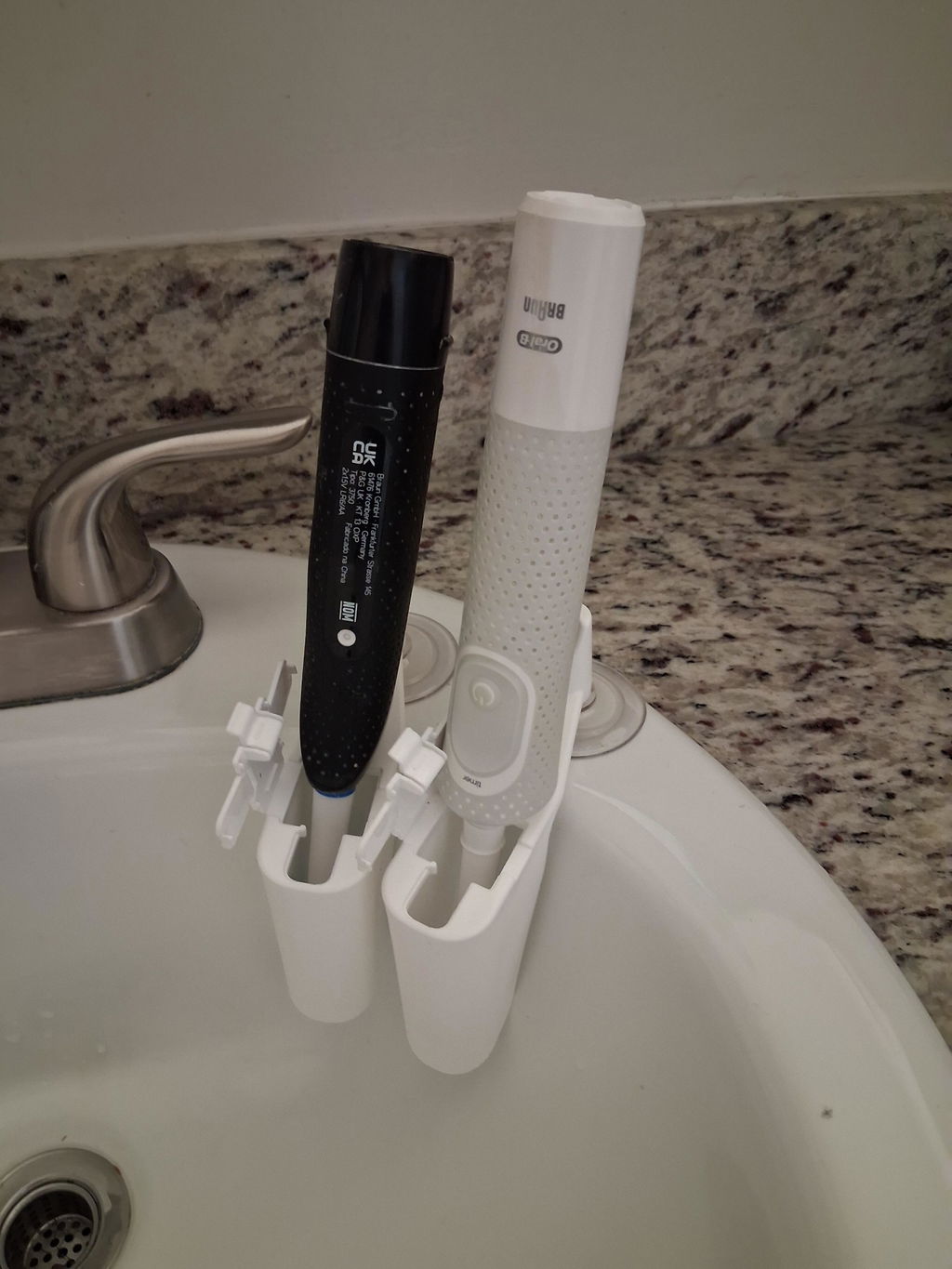
Mold forms there because water and toothpaste residue collect at the base of the brush and never fully dry. Over time they form crusty, unhygienic circles of mold.
Electric toothbrushes offer convenience and efficiency, but they are harder to store well. That crust is not just unpleasant to look at. The gunk that builds up around the base of an electric toothbrush stays damp and rarely gets cleaned. Give it a wipe often.
Are toothbrush caps and covers bad for your toothbrush? (The Cap-er)
Yes, they can do more harm than good. Tight caps trap moisture around the bristles. The ADA advises against routinely covering toothbrushes, because a closed, moist space lets more bacteria grow than open air.
They look like a smart way to keep a toothbrush clean. But your toothbrush needs to breathe to stay dry and hygienic, and caps simply do not allow for that.
Is it safe to leave your toothbrush on the sink? (The Sink-er)
It is a risky habit. Each flush can send a fine spray into the air, and the ADA notes toothbrushes can pick up fecal bacteria this way.
The sink counter gets splashed all day, so it's not the cleanest place to leave a brush either. Leaving it on the sink is convenient, but it is time to rethink where your brush sits between uses.
Is a toothbrush cup unhygienic? (The Cup-er)
Usually, yes. Toothbrush cups quickly become coated with mildew and bacteria. When brushes share a cup, their heads touch. The ADA advises keeping stored toothbrushes separated to prevent cross-contamination.
A cup seems innocent enough, but it is a recipe for disaster. Sharing germs with your family members is the last thing you want from your oral hygiene routine.
What is a more hygienic way to store a toothbrush?
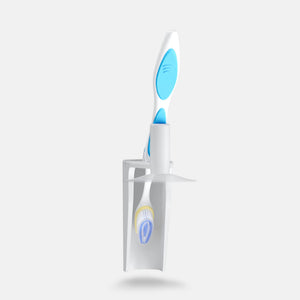
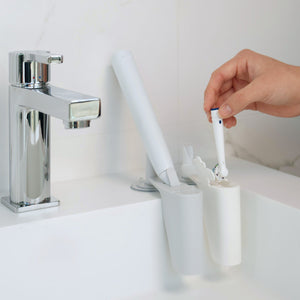
A more hygienic option is a holder that lets your brush dry fully and keeps it off open surfaces. NOOK™ is an eco-friendly toothbrush holder (100% recyclable and BPA-free) that keeps most manual and electric toothbrushes protected from harmful bacteria. It protects against 99.9% of bacteria tested by Nelson Labs.
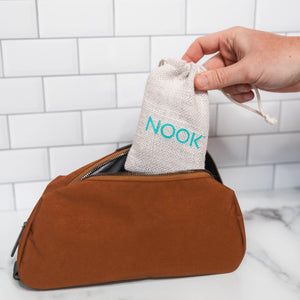
Its open-back design allows airflow around your toothbrush, so it dries thoroughly between uses. Its compact size makes it an easy bathroom organizer, whether you are at home or traveling.
Say goodbye to moldy crusts, suffocating covers, sink-dwelling germs and cup-induced contamination. NOOK is the future of toothbrush storage.
Key takeaways
- Avoid crusty residue at the base, caps that trap moisture, brushes left on the sink and shared cups.
- A holder that lets the brush dry fully, like NOOK, avoids all four.
,%20the%20Cap-er%20(caps%20and%20covers%20that%20trap%20moisture),%20the%20Sink-er%20(a%20brush%20left%20expo...)